
Table of Contents

Temperature Control Relay Supplier UAE – PANATECH

Types of Temperature Control Relays

Here is your text converted into a natural, human like style:

1. On/Off Temperature Control Relay

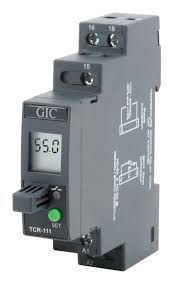
This is the simplest form, which switches the system completely on or off once a certain temperature is reached. They are cost-effective and are found in simpler heating or cooling applications.

2. Differential Temperature Control Relay

These relays measure the difference between two temperature points. The system turns on when two temperatures become a certain difference apart and will turn off again when this difference diminishes. This type is usually seen in applications like refrigeration units, solar heating, and in HVAC systems.

3. Analog Temperature Control Relay

Analog temperature control relays allow for more accuracy than simple on/off types by sending a continuous signal proportional to temperature changes. These are frequently employed in a wide range of industrial and laboratory environments.

4. Digital Temperature Control Relay

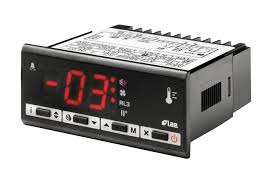
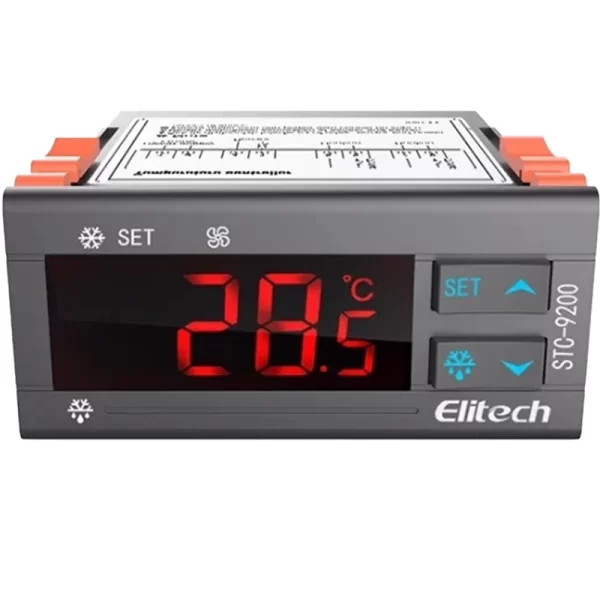
These relays make use of micro-processor technology to perform their task and display readings on a digital display. The advanced digital features permit more precision, more setpoints, and offer higher accuracy making this a common type used in many industrial situations.

5. PID Temperature Control Relay

PID stands for Proportional-Integral-Derivative which means these relays are designed to automatically compute a control error and take automatic action. These highly accurate relays are suitable for use in such things as laboratories, ovens and industrial and manufacturing processes.

6. Multi-Channel Temperature Control Relay

As the name implies, these relays monitor and control more than one temperature at once. These are especially useful in large scale industrial operations, factories, greenhouses, and processing industries.

7. Programmable Temperature Control Relay

Programmable temperature controllers allow the user to set multiple programmes, timer functions, and various temperature ranges. These are typically found in things like ovens, incubators and industrial tests.

Uses of Temperature Control Relays

Here are 8 common applications of temperature control relays:

1. HVAC Systems

In the HVAC sector, temperature control relays are essential for controlling the temperatures of individual rooms and entire buildings. They switch compressors, fans, and heaters as needed to provide comfortable temperature control while using energy as efficiently as possible.

2.Industrial Manufacturing

For industries dealing with the manufacture of plastics, chemicals, or textiles, temperature control relays are used to control boilers, furnaces, and process heaters to achieve precise temperature settings.

3. Refrigeration and cold storage

This applies to storage for products like food and medicines that require consistent cold storage temperature, as well as refrigeration units.

4.Laboratories and research facilities

Laboratory equipment including incubators, test chambers, and ovens can achieve the most accurate and controlled temperatures by using temperature control relays to switch the devices at specific points.

5. Medical equipment

Many medical appliances require stable temperature regulation including incubators, ovens, sterilizers and diagnostic equipment, and use relays to operate as temperature control.

6.Greenhouses and agriculture

Farmers and horticulturalists can keep their greenhouses or crops at the optimal temperature using relays to switch heating, cooling and ventilation systems.

7. Automotive and electronics

Temperature control relays are used in the automotive industry to control engine temperature, in addition to in electronic devices as control for any heat-sensitive circuitry.

8.Energy and power systems

Energy generating facilities, such as power plants and solar heating systems, rely on relays to manage heat as part of the process.

CategoryDetails
Service AreaDubai & Across UAE
Primary SolutionTemperature Monitoring Systems UAE
SpecializationIndustrial Heating and Cooling Control UAE
Key ProductTemperature Control Relays
ApplicationsHVAC systems, industrial machinery, control panels
Key BenefitsAccurate control, energy efficiency, system protection

Whether you need a simple temperature control solution or a complete automation system, Panatech delivers products that meet the demands of modern industries. Our portfolio includes solutions from a trusted Temperature control Relay supplier UAE, Temperature control equipment supplier UAE, and Temperature control system supplier UAE, ensuring reliable performance in a wide range of applications. As an experienced Industrial temperature control supplier UAE, we supply high-quality products including Temperature controller supplier UAE, Digital temperature controller UAE, and PID temperature controller supplier UAE models for precise temperature regulation. We also support specialized applications through our HVAC temperature control supplier UAE and Laboratory temperature control supplier UAE solutions, while our Temperature monitoring systems UAE and Industrial heating and cooling control UAE products help improve process efficiency, equipment protection, and overall operational reliability.Panatech is a trusted Temperature control Relay supplier UAE, providing reliable solutions for precise temperature management across industrial and commercial applications. As a leading Temperature control equipment supplier UAE and Temperature control system supplier UAE, we offer high-quality products designed for consistent performance and efficiency. Our range includes solutions from a dependable Industrial temperature control supplier UAE, advanced products from a Temperature controller supplier UAE, and accurate Digital temperature controller UAE models for various industries. We also supply PID temperature controller supplier UAE solutions for precise process control, along with products from a trusted HVAC temperature control supplier UAE and Laboratory temperature control supplier UAE. In addition, Panatech provides advanced Temperature monitoring systems UAE and complete Industrial heating and cooling control UAE solutions to help businesses maintain safe, stable, and energy-efficient operations.Modern Temperature Monitoring Systems UAE are integral to ensuring proper environmental control and smooth industrial operations. Businesses across a range of sectors depend on Industrial heating and cooling control UAE solutions to manage temperatures precisely, enhance equipment performance and minimize operational risks. Advanced Temperature monitoring systems UAE now provide up-to-the-minute data, precise monitoring and reliable alerts that help industries maintain optimal working conditions. In addition to this, high-quality Industrial heating and cooling control UAE systems are ideal for improving energy efficiency, stable process control and enhanced productivity in challenging industrial environments. A trustworthy Temperature control Relay supplier UAE plays a critical role in maintaining accurate thermal management across diverse industries. Reliable Temperature monitoring systems UAE ensure that accurate and consistent working conditions are achieved for optimum equipment performance. Industrial heating and cooling control UAE solutions are a necessity in manufacturing environments, as precise temperature levels can have a direct impact on productivity and overall safety. Furthermore, a reputable HVAC temperature control supplier UAE offers energy-efficient systems designed to regulate indoor climate control for both commercial and domestic applications. A professional Laboratory temperature control supplier UAE can provide highly precise and stable working conditions essential for scientific experiments and research endeavors. Temperature control is a primary necessity in several sectors such as manufacturing, HVAC, food processing, pharmaceutical, laboratories, plastic manufacturing and electronics. The primary switching component used in many of these temperature control systems is called the temperature controller relay, which ensures precise temperature levels by controlling either a cooling or heating apparatus based on information from the temperature sensors. This article discusses the concept of a temperature controller relay and elaborates on its mechanism, various types of relays, applications and advantages, wiring procedures, selection parameters and how to perform maintenance. What is a temperature controller relay? Advanced Control Logic and Relay Interaction The way that relays function in modern temperature control systems has been revolutionized; these devices no longer operate individually. Rather, they integrate and communicate with advanced control logic built into digital temperature controllers, PLCs, and other automation systems. Although the relay acts as the final control device, the control system's intelligence, which could involve adaptive control algorithms, hysteresis, and safety interlocks, directs its operation. A key feature for relay-based control systems is hysteresis, or differential control. If there were no hysteresis the relay would be constantly switching ON and OFF in very close proximity to the setpoint, resulting in excessive wear or potential over-heating. A specific upper and lower switching range ensures that the relay only operates when the temperature fluctuates significantly above or below the desired setpoint, leading to better stable operation and a much longer relay life. Relay outputs are also frequently integrated with interlocking systems within an industrial setting. These prevent relay energizing in unsafe situations that could result from any combination of sensor failure, high electrical current, or unacceptable temperature rise. Fail-Safe Design in Temperature Controller Relay Systems Fail-safe design is a necessity when precise temperature control is critical for maintaining safety, product quality, or equipment longevity. A temperature controller relay can be designed so that it fail-safe. Heating applications will typically have a normally open relay, which cuts power to the heater if power fails or a fault occurs. Cooling applications will use a normally closed configuration which provides continued cooling if a failure occurs. Alarm relays which activate visible or audible warnings are also typically used with failure analysis. These alarm relays are independent of the primary control relay. Redundant Relay Systems for Critical Applications Critical applications, including but not limited to, chemical processing, food production and pharmaceutical manufacturing, rely on redundancy for seamless system operation. This is achieved by using multiple relay systems that operate in unison, either in parallel or in series. If the primary relay fails, a secondary relay instantly assumes its duties, preventing product spoilage or safety hazards. A common component used in these situations is a temperature controller with dual relay output which can independently control the cooling, heating and alarm circuits. Relay Contact Ratings and Load Matching Poor load matching is one of the most frequent causes of relay failure. Each relay has contacts that are designed to handle specific amounts of power measured in voltage and current. For example, while an electromechanical relay can directly switch resistive loads (such as electric heaters) on and off, they cannot directly switch inductive loads (such as motors or compressors) which often create a high initial in-rush current and potential voltage spikes when switching that could damage the contacts. To protect relay contacts, more advanced switches like contactors or SSR's (Solid State Relays) coupled with a snubber circuit are often used with inductive loads. A full understanding of contact ratings, especially the load type to be switched and the amount of current that it draws, is essential for long term operational reliability. Temperature Controller Relay in Heating Applications Heating systems will utilize relays to turn electric heating elements, coils or heaters ON or OFF. Examples of systems that employ this kind of relay switching are ovens, furnaces, water heaters and industrial drying ovens. Most of these systems operate with a simple on-off switching method with the use of electromechanical relays. More precise heating systems, typically PID (Proportional Integral Derivative) controlled SSRs (Solid State Relays), will be able to achieve more precise results and less wear. Correct relay choice directly correlates to the efficiency of heating, stability of working temperatures, and power consumption. Temperature Monitoring Systems UAE - Panatech Temperature Monitoring Systems UAE are critical in achieving precision and safety within industrial settings. Reliable, up-to-the-minute monitoring solutions are available globally from Panatech. These systems aid in maintaining compliance, enhancing operational efficiency, and minimizing potential risks. Advanced features that are often included are real-time remote access, automated alerts, comprehensive data logging, and sensors capable of high precision. Some of the many benefits include improved quality control, cost savings, and compliance support. Products designed for specialized uses within the food, health care, and industrial sectors are readily available from Panatech. Temperature Controller Relay in Cooling Applications Relays within cooling systems will control mechanisms such as compressors, cooling fans, or solenoid valves. Protection of the compressor within a refrigeration system must be taken into consideration during relay switching as a safety measure, specifically as to when the relay can operate (compressor off time) to avoid potential damage to the component. Some temperature controllers provide specific functions for a delay on the compressor activation until a predetermined period has passed to prevent too-quick switching. These systems utilize inductive load and large start up currents, which will often lead the use of contracters and SSRs over an electromechanical relay. Integration with PLC and Automation Systems When temperature controller relays are utilized in an automated industrial environment the temperature controller itself can be connected and integrated with the PLC that is managing the various other devices within the system. The individual controller is capable of precisely measuring temperature, while the PLC manages logic, sequencing and system communication. By connecting the relay outputs from the temperature controller into the inputs on the PLC, events within the temperature controller such as high temperature warnings can then trigger automated shutdowns or alarms. Similarly, a PLC could use input temperature values to directly control SSRs. This level of integration allows for flexibility, scalability, and increased monitoring capabilities within a system. Smart Temperature Controllers and Relay Outputs Most modern temperature controllers have digital displays and can utilize communication interfaces to remotely monitor a given system. The relay outputs associated with these modern controllers can be individually configured and controlled using software rather than being wired.Remote control of relay states can be achieved using Modbus, RS485, and Ethernet communication protocols. With these technologies operators can change setpoints, monitor the switching of the relays and be notified if an alert occurs, without being at the control panel. These capabilities improve efficiency and reduce maintenance costs. Environmental Influences on Relay Performance Environmental factors significantly affect the performance and life span of a relay. Higher ambient temperatures can limit the capacity of a relay, particularly for solid-state relays which generate heat internally. Temperature controller relays are employed in labs for incubators, water baths, and test chambers; in plastic and rubber industries to control mold temperatures; and in pharmaceutical and chemical plants to manage critical process temperatures. Advantages of Temperature Controller Relays: Safe electrical isolation between control and power circuits; reliable switching; compatible with various loads. Easy integration, cost-effective, suitable for both simple and complex systems; solid-state relays offer silent operation and long life. Limitations and Considerations: Electromechanical relays have limited mechanical life and are unsuitable for high-frequency switching. Solid-state relays generate heat and require proper thermal management. Incorrect selection can cause overheating, contact welding, or system failure. Carefully consider load rating, switching frequency, and environment. Wiring Basics of Temperature Controller Relay: Controller output terminals connect to the relay coil or internal contacts. Load circuit wired through relay contacts, not directly to the controller. Proper grounding, fuse protection, and cable sizing are essential. Provide heat sinks and ventilation for SSRs. Selecting the Right Temperature Controller Relay: Choose based on load current, voltage, switching frequency, control method, and environment. Electromechanical relays are sufficient for low-switching frequency with small heaters. Solid-state relays are preferred for precise control and high switching frequency. Consider ambient temperature, dust, vibration, and humidity. Maintenance and Troubleshooting: Regular inspections prevent failure. Check electromechanical relay contacts for wear and noise; monitor solid-state relays for overheating. Common issues include relay not switching, stuck contacts, and overheating. Proper installation and load matching reduce failures. Safety Aspects: Comply with electrical safety standards. Ensure overcurrent protection, proper insulation, and fail-safe configurations. Backup relays or alarms may be needed in critical applications. Future Trends in Temperature Control Relays: Increasing use of solid-state and hybrid relay technology. Integration with PLCs, IoT systems, and smart monitoring platforms. Advanced controllers offer adaptive PID control, remote monitoring, and predictive maintenance. Conclusion: Temperature controller relays are essential for safe, reliable, and accurate temperature regulation. Proper selection and application ensure system performance, safety, and efficiency.Temperature Control Solutions for Industrial Applications Temperature control plays a vital role in maintaining the efficiency, safety, and reliability of industrial operations. Many industries depend on accurate temperature management to ensure product quality, protect equipment, and reduce energy consumption. From manufacturing plants and food processing facilities to pharmaceutical laboratories and HVAC systems, maintaining the correct temperature is essential for smooth and uninterrupted operations. Modern temperature control systems are designed to monitor and regulate heat automatically. These systems help maintain consistent operating conditions by adjusting heating or cooling equipment whenever temperatures rise above or fall below the required levels. This not only improves process accuracy but also extends the lifespan of machinery and minimizes unexpected downtime. One of the most commonly used devices is the digital temperature controller. These controllers continuously monitor temperature through connected sensors and automatically control heating or cooling equipment to maintain the desired set point. Their easy-to-read displays, precise control, and user-friendly operation make them suitable for a wide range of industrial applications. For applications requiring even greater precision, PID (Proportional-Integral-Derivative) temperature controllers are an excellent choice. Unlike standard on/off controllers, PID controllers continuously calculate and adjust output based on temperature variations. This results in faster response times, improved stability, and minimal temperature fluctuations, making them ideal for industries where accuracy is critical. Temperature control relays are another important part of industrial temperature management systems. They help automate the switching of heaters, cooling fans, compressors, and other equipment based on temperature conditions. By responding quickly to changing temperatures, these relays help protect valuable equipment from overheating or excessive cooling. Temperature monitoring systems allow operators to track real-time temperature data across multiple machines and production areas. These systems help identify potential issues before they become serious problems, improving preventive maintenance and reducing costly equipment failures. Many modern monitoring systems also provide alarm functions, data logging, and remote monitoring capabilities for greater operational control. Industrial heating and cooling systems are used to maintain stable operating environments in factories, warehouses, laboratories, and commercial buildings. Proper temperature regulation improves product quality, protects sensitive equipment, and creates safer working conditions for employees. Efficient temperature control also helps reduce energy consumption by operating heating and cooling equipment only when necessary. Temperature control solutions are widely used across many industries. Manufacturing plants rely on them for machine operation and production consistency. Food and beverage facilities use temperature control to maintain hygiene and product quality. Pharmaceutical companies depend on accurate temperature regulation for storage and production processes. HVAC systems use temperature controllers to maintain comfortable indoor environments while improving energy efficiency. Laboratories also require precise temperature control for testing, research, and calibration activities. When selecting a temperature control solution, businesses should consider factors such as operating temperature range, controller type, sensor compatibility, accuracy requirements, environmental conditions, and ease of installation. Choosing the right solution helps improve productivity, reduce maintenance costs, and increase system reliability. As industries continue to adopt smarter automation technologies, advanced temperature control systems have become an essential part of modern industrial operations. Reliable temperature management improves efficiency, enhances safety, protects valuable equipment, and supports consistent production, making it an important investment for businesses seeking long-term operational success.

How does PANATECH ensure quality as a Temperature control Relay supplier UAE?

PANATECH maintains high standards as a Temperature control Relay supplier UAE by sourcing premium components and following strict quality control processes. PANATECH ensures that every relay delivers accurate temperature regulation, durability, and reliable performance in demanding industrial environments. With a focus on innovation and customer satisfaction, PANATECH consistently provides dependable temperature control solutions across the UAE.

How Do I Know If My Temperature Controller Is Reading Correctly?

Compare the controller's reading with a calibrated thermometer or sensor. If the readings are significantly different, the controller or sensor may need calibration or replacement.

What's the Difference Between a Thermostat and a Temperature Control Relay?

A thermostat directly switches heating or cooling equipment on and off based on temperature, while a temperature control relay works with a controller to automatically operate connected devices when a preset temperature is reached.

How Long Do Temperature Control Relays Usually Last?

A quality temperature control relay can last 5–10 years or more, depending on usage, operating conditions, and regular maintenance.

What Happens if My Temperature Control Relay Fails?

If the relay fails, the heating or cooling system may stop working or run continuously, which can affect temperature control and potentially damage equipment. Regular inspection and timely replacement can help prevent these issues.

Can Temperature Control Relays Help Prevent Equipment Overheating?

Yes. Temperature control relays automatically switch equipment on or off when preset temperature limits are reached, helping prevent overheating and protecting your equipment.

What Temperature Range Should My Controller Handle?

The ideal temperature range depends on your application. Choose a controller that matches the operating temperature requirements of your equipment and process for accurate and reliable performance.

Leave a Reply

Your email address will not be published. Required fields are marked *

Comments

  1. We purchased temperature control products from Panatech, and the quality has been excellent. The controllers are accurate, easy to install, and have been performing reliably. The team was knowledgeable, delivery was quick, and their support was outstanding. Highly recommended for industrial temperature control solutions.