Table of Contents

Stepping Motor Supplier UAE

High-Performance Stepping Motors & Drives from PANATECH UAE

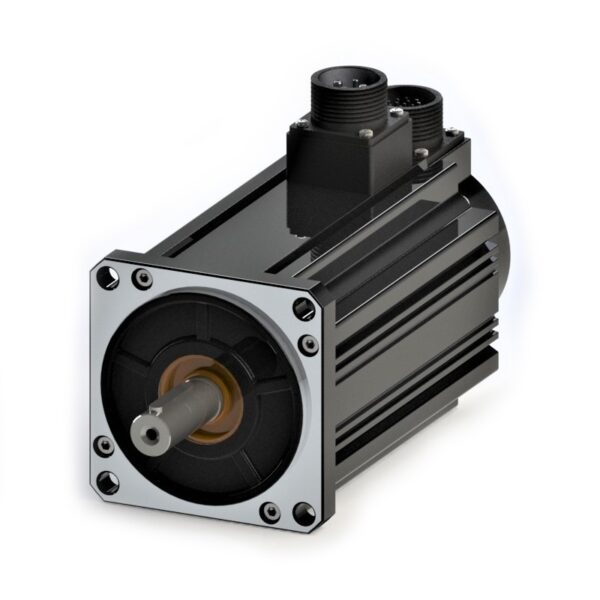
PANATECH is a premier supplier of premium quality stepper motors and drives in the UAE, servicing the automation, robotics, and motion control segments. Stepper motors or stepping motors are used in applications that necessitate extremely accurate movement or positioning.PANATECH provides an extensive portfolio of stepper motors available in various dimensions, motor powers, and voltages, to serve a multitude of industrial applications. These motors deliver very precise and dependable results in CNC machining centers, 3D printers, medical equipment and apparatus, as well as the packaging industry. PANATECH takes care to only use top class brands in motor manufacturing to serve various applications.

Further to delivering a plethora of stepper motors of excellent quality,PANATECH also offers its range of suitable, high-performance stepping motor drives. Stepping motor drives facilitate precise control over the speed, torque, and direction of the stepper motor, in a hassle-free and cost-effective manner, thus integrating smoothly with automation control solutions. Our products in the stepper motor driver line-up also comprises both, open-loop, and closed-loopStepper Motor Drivesfrom leading International names such as Delta, Panasonic, & Schneider Electric.

These drivers not only improves system efficiency but also minimizes resonance in operation, enabling smoother motion control even in high performance demand applications.With technical assistance and after sales services and prompt delivery in UAE ,Panatech is best fitted to solve your motion control requirements.
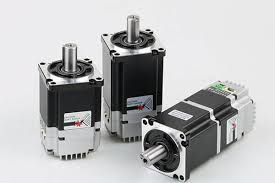
Unlocking the Power of Motion: Types of Stepping Motors & Drives

Types of Stepping Motor

1. Permanent Magnet Stepper Motor (PM Stepper)

The Permanent Magnet Stepper Motor works based on a permanent magnetrotor and an electromagnetic coils-stator. The motor works on a relatively basic principle, is cheap, is easily understandable and thus easiest to operate. The working is based on a permanent magnets rotor and the stator which consists of magnetic poles surrounded by electromagnetic coil.

PM stepper motors are best for low speed & low torque motor applications like in small printer/scan devices and household appliances.

For applications which demands lesser accuracy and minimal response speed, PM are the best option to use.

2. Variable Reluctance Stepper Motor (VR Stepper)

The Variable Reluctance Stepper Motor consists of soft iron and a rotor along with multiple sets of stator windings. It produces its output by realigning magnetic reluctance with the poles of the stator every step energized, ensuring no external magnetic force. No permanent magnet in VR stepper motor allows for the higher speeds. VR steppers have an inherently low inertia, making them suited for applications where speed of response and acceleration is most important with low overall torque: primarily small positioning systems and some instrumental applications.

3. Hybrid Stepper Motor

A Hybrid Stepper Motor combines the benefits of both the above systems (Permanent Magnet & Variable Reluctance type of stepper motor) thus gives highest possible performance (higher torque output at each speeds) to cost ratio for moderate speed. The rotor is a permanent magnet which is enclosed by toothed structure made of laminations to help in alignment and provide an efficient magnetic structure. The output in a Hybrid motor is generated as the magnetic lines of force produced in stator can only follow paths available for minimum flux path.

4. Closed-Loop Stepper Motor

A Closed-Loop Stepper Motor has its rotor position continuously monitored by an encoder or any other feedback device to ensure that the rotor is always where it should be and it’s never “lost” steps or positions. It’s a motor with intelligent “eyes” always seeing how well it is operating. The advantages are increased torque, decreased risk of dropped steps, reduced vibration.

It can increase response speed and decrease motor heat.

It is used in High-value and Precision driven devices.

5. Unipolar Stepper Motor

In order to simplify the required power circuit unipolar construction has been employed. It comprises of DC motor in which two or more sets of coils used and dc power can be made available to each coil. These motor are of moderate torques and can be easily drive by using H- drive controller circuit. Unipolar devices require fewer signal lines to drive them when driving only 2 phases at a time; driving just two phases at a time in bipolar drives is usually the standard efficient drive; you need to drive A1- B1 and B2-A2 for unipolar driver.

6. Bipolar Stepper Motor

The Bipolar Stepper Motor uses center-tapped, full bipolar windgings. Current flows from H-bridge to control the drive current to both the poles (in both directions). They have slightly higher torque output over unipolar motors. Bipolar devices often deliver better performance like Higher torque to cost ratio, Better energy efficiency over unipolar versions for a number of applications including Professional CNC machined, medical instrumentation etc.

Types of Stepper Motor Drives

1. L/R Drives (Resistance-Limited Drives)

These linear drives (L/R) use fixed resistances for voltage limiting. These drives are simple, inexpensive, but heat generated is a serious consideration and hence it offers limited performance particularly regarding speed and torque. These Drives are used for very low-end and no particular precise movement.

2. Chopper Drives

Chopper drives use high-frequency switching (PWM) method to deliver controlled amount of current that power is efficiently utilized; generating minimum heating and better speed torque capability than that offered by L/R drives. These drives are widely suitable for medium range and even for higher range motor control systems especially for applications like conveyors, automation and others where a stable and efficient torque needs at respective speed throughout.

3. Microstepping Drives

Microstepper divides each full step of a stepper motor into smaller intervals (called micro-steps) up to several thousand. The resultant is very smooth, nearly noiseless operation & reduced vibration at very low speed range. Precise micro stepping leads to increased position resolution and reduced risk of skipped steps in these drive modules. Used mainly in automation equipments and specialized application including printing and CNC’s for enhanced stability.

4. Closed-Loop Stepper Drives

Closed Loop Stepper Drives ensure the motor performs as commanded without missing steps or entering stall. It has capability to monitor motor position and react to compensate for errors in real-time. Thus, the servo capability in terms of accuracy and speed, along with smooth smooth operation and torque can be maintained in high demands. Closed-loop systems allow optimizing for performance, efficiency, and overall operating characteristics.

5. Digital Stepper Drives

Digital drives receives digital input signals to create a controlled train of pulses driving the stepper motor. They provide a high degree of control over motor parameters, such as acceleration, deceleration, microstepping resolution, and indexing. Digital stepper drives are highly programmable and integrated into automated industrial and commercial systems.

6. Analog Stepper Drives

Analog stepper drives control the motor by using continuous analog signals (voltage or current). They are less flexible and often offer fewer features compared to digital drives, but can be simpler to integrate into existing analog-based systems. Often used in older or more basic automated setups where digital control is not necessary.

The Practical Benefits of Stepping Motors & Drives

Stepping motors and drives are indispensable to the field of automation and control applications. These motors are characterized by their ability to rotate in discrete angular steps, which enables precise control of positioning and motion without the necessity for sophisticated feedback systems. This capability makes them appropriate for usage in a wide range of machinery, including 3D printers, CNC machines, textile equipment and robotic applications. Since each pulse transmitted to the stepping motor equates to a precise rotational movement, they provide the perfect setup for operation in which accurate rotation and control of speed and stopping position are required.

The stepping motor drivers add to the functionality of stepping motors and improve performance by controlling current flow, which is critical for smooth operation, higher torque and less vibration. Using advanced features like micro-stepping and closed-loop control, even greater precision, stability and responsiveness can be achieved. Stepping motor systems are ideal for all applications requiring accurate positioning and positioning-based motion control-whether for medical instruments, manufacturing lines or automated inspection equipment.

Why is choosing a Stepping Motor Supplier UAE important for industries?

A Stepping Motor Supplier UAE ensures reliable, high-performance motors suited for industrial automation.

What Is a Stepping Motor?

A stepping motor is designed to move in precise, controlled steps, making it suitable for applications that require accurate positioning and motion control.

Where Are Stepping Motors Commonly Used?

They are widely used in CNC machines, robotics, packaging equipment, printers, conveyors, and industrial automation systems.

How Do I Choose the Right Stepping Motor?

Consider factors such as required torque, speed, load, motor size, operating voltage, and the type of driver or controller used.

What Is the Difference Between a Stepping Motor and a Servo Motor?

Stepping motors generally provide simple and precise open-loop positioning, while servo motors use feedback for more advanced speed, torque, and position control.

Do Stepping Motors Need a Driver?

Yes. A suitable stepper driver controls the motor’s current and movement according to signals from the controller.

Where Can I Find a Reliable Stepping Motor Supplier UAE?

Choose an experienced supplier such as Panatech that can provide suitable motors, drivers, technical guidance, and support for your automation requirements.

What Are the Key Benefits of Choosing a Stepping Motor Supplier UAE?

CriteriaAdvantage for Industrial Applications
Precision ControlAccurate positioning and repeatable motion
High Torque PerformanceSuitable for heavy-duty automation tasks
Quality AssuranceTested motors meeting industrial standards
Wide Product RangeMultiple NEMA sizes and torque options
Technical ExpertiseProfessional selection and integration guidance
Fast UAE DeliveryReduced downtime and quick project execution
Bulk AvailabilityIdeal for large-scale industrial requirements
After-Sales SupportOngoing assistance and troubleshooting support

Leave a Reply

Your email address will not be published. Required fields are marked *

Comments

  1. We were looking for a reliable Stepping Motor Supplier UAE and chose Panatech for our automation project. The motor quality was excellent, delivery was on time, and the team helped us select the right solution for our application. Very happy with the service and support.

Stepping Motor Supplier UAE Stepper Motor Drive Supplier UAE Stepping Motor and Drive UAE Stepper Motor Systems UAE Stepper Drive Supplier UAE Stepper Motor Distributor UAE Stepper Drive Distributor UAE Stepper Motor Kits UAE Delta Stepper Motor UAE Panasonic Stepper Drive Supplier UAE Schneider Electric Stepping Motors UAE Mitsubishi Stepper Drive UAE Yaskawa Stepping Motor UAE Siemens Stepper Drive UAE Omron Stepper Motor UAE Compatible Stepper Drives UAE Stepping Motors Drive Comprehensive Guide to Stepping Motors and Drives Introduction Stepping motors and drives are vital components in a wide range of industrial, commercial, and consumer applications. They play a crucial role in systems that require precise control of movement, such as CNC machinery, robotics, 3D printing, medical devices, and more. Their ability to divide a full rotation into an equal number of steps allows for accurate positioning and repeatability, making them a popular choice in automation and control systems. This comprehensive guide will cover everything you need to know about stepping motors and their drive systems, including their types, working principles, benefits, applications, and how to choose the right solution for your needs. Delta Stepper Motor UAE Panasonic Stepper Drive Supplier UAE Schneider Electric Stepping Motors UAE Mitsubishi Stepper Drive UAE Yaskawa Stepping Motor UAE Siemens Stepper Drive UAE Omron Stepper Motor UAE What is a Stepping Motor? A stepping motor, or stepper motor, is an electromechanical device that converts electrical pulses into discrete mechanical movements. The motor divides a full rotation into a number of equal steps. Unlike traditional DC motors, which rotate continuously when powered, stepper motors move in fixed increments, making them ideal for applications that require precise control of angular or linear position. Stepping Motor Supplier UAE Stepping Motor Supplier UAE Stepping Motor Supplier UAE Stepping Motor Supplier UAE Stepping Motor Supplier UAE Stepping Motor Supplier UAE Stepping Motor Supplier UAE Stepping Motor Supplier UAE Stepping Motor Supplier UAE Stepping Motor Supplier UAE Stepping Motor Supplier UAE Stepping Motor Supplier UAE Stepping Motor Supplier UAE Stepping Motor Supplier UAE Stepping Motor Supplier UAE Stepping Motor Supplier UAE Each pulse sent to a stepper motor causes it to rotate a specific angle. These pulses are usually generated by a drive, which is controlled by a motion controller or a microcontroller. The accuracy of movement depends on the step angle of the motor, and modern stepper motors can offer very fine resolution. Types of Stepping Motors There are several types of stepper motors, each with unique features and use cases: 1. Permanent Magnet Stepper Motors (PM Steppers): These motors use a rotor made from permanent magnets. They are simple in construction and ideal for low-speed, low-torque applications. Their performance is limited compared to other types, but they are cost-effective and widely used in consumer electronics. 2. Variable Reluctance Stepper Motors (VR Steppers): VR steppers have a soft iron rotor and rely on magnetic reluctance to generate motion. They offer high stepping rates and fast response times but typically produce lower torque. They are often used in instrumentation and lightweight mechanical systems. 3. Hybrid Stepper Motors: Hybrid steppers combine the best features of PM and VR stepper motors. They use a toothed rotor made from permanent magnets and offer higher torque and precision. These motors are the most commonly used type in industrial applications due to their reliability and performance. 4. Unipolar Stepper Motors: These motors have windings with a center tap, allowing for easier driving using simpler circuits. However, they generally produce less torque than bipolar stepper motors. Unipolar steppers are suitable for basic positioning systems and hobby projects. 5. Bipolar Stepper Motors: Bipolar motors require more complex driving circuitry but deliver higher torque and better efficiency. They are widely used in professional-grade applications that demand more power and reliability. 6. Closed-Loop Stepper Motors: These motors integrate feedback devices such as encoders to monitor position in real-time. The system adjusts input signals based on feedback to ensure accuracy, reduce heat, and avoid missed steps. They are ideal for high-performance applications. How Stepping Motors Work A stepping motor operates by energizing different stator windings in a specific sequence. When a winding is energized, it creates a magnetic field that attracts the teeth of the rotor, causing it to align. By switching the current between the windings in a controlled manner, the rotor moves step by step. The movement is controlled by a drive that sends a sequence of electrical pulses to the motor. Each pulse advances the motor by one step. The speed of rotation is determined by the frequency of the pulses, while the direction is set by the order of phase activation. Microstepping is a technique that involves dividing each full step into smaller micro-steps by partially energizing adjacent coils. This results in smoother motion and greater positional accuracy. What is a Stepper Motor Drive? A stepper motor drive (or driver) is an electronic device that controls the flow of electricity to the stepper motor. It interprets control signals from a motion controller and switches the power to the motor coils accordingly. Drives manage motor speed, direction, and torque. Drives come in various types and configurations: 1. L/R Drives: These are simple drives that use resistors to limit current. They are inexpensive but less efficient and generate more heat. 2. Chopper Drives: These use pulse-width modulation (PWM) to regulate current, offering better efficiency, performance, and heat management. They are suitable for most modern applications. 3. Microstepping Drives: Microstepping drives enhance resolution and motion smoothness by dividing full steps into smaller increments. They provide better performance in precision applications. 4. Closed-Loop Drives: These incorporate feedback mechanisms to monitor and adjust motor operation in real time. They prevent stalling and improve dynamic response. Advantages of Stepping Motors and Drives Precision: Each input pulse corresponds to a fixed movement, ensuring accurate positioning. Repeatability: Movements are highly repeatable, making them ideal for automated systems. Simplicity: Control systems are relatively easy to design and implement. Cost-Effective: Generally more affordable than servo systems for similar tasks. No Feedback Required (Open-Loop): Many systems function without encoders or sensors. Reliable Performance: Fewer mechanical parts reduce the chance of failure. Applications of Stepping Motors and Drives Stepping motors and drives are found in a broad range of applications: Industrial Automation: CNC machines, conveyor systems, and pick-and-place machines. Medical Devices: Syringe pumps, MRI systems, and surgical equipment. Consumer Electronics: Printers, scanners, and disk drives. Robotics: Joint articulation, wheel control, and end effector precision. Textile Machines: Thread feeders, cutting tools, and pattern machines. Aerospace and Defense: Satellite positioning, drones, and weapon control systems. Choosing the Right Stepping Motor and Drive When selecting a stepping motor and drive system, consider the following: Torque Requirements: Ensure the motor can provide sufficient torque for your load. Step Resolution: Choose appropriate step angles for the level of precision required. Speed Profile: Match the motor to the desired acceleration and speed. Voltage and Current Ratings: Ensure compatibility with your power source and drive. Control System: Determine whether you need open-loop or closed-loop control. Environmental Conditions: Factor in temperature, humidity, and dust exposure. PANATECH – Your Trusted Supplier in the UAE PANATECH is a leading supplier of stepping motors and drives in the UAE, offering a wide range of high-performance solutions for automation and motion control. With top brands like Delta, Panasonic, Siemens, and Schneider Electric, PANATECH ensures premium quality, reliability, and technical support. Whether you’re working on an industrial automation project or a precision laboratory setup, PANATECH provides expert guidance, fast delivery, and products that meet international standards. From simple unipolar motors to advanced closed-loop systems, PANATECH caters to various sectors including manufacturing, healthcare, aerospace, and consumer electronics. Conclusion Stepping motors and drives form the backbone of countless automated systems worldwide. Their precision, reliability, and cost-effectiveness make them an essential component in industries ranging from healthcare to aerospace. Understanding the different types, how they work, and how to select the right combination can greatly enhance the efficiency and performance of your application. With trusted suppliers like PANATECH in the UAE, sourcing high-quality stepping motor solutions has never been easier. Whether you need compact motors for a medical device or robust systems for heavy-duty machinery, stepping motors and drives offer the versatility and power to drive innovation forward. Mastering Precision: A Guide to Stepping Motors & Drives In the world of automation and robotics, precision is everything—and that’s where stepping motors and drives shine. These powerful components are the unsung heroes behind countless machines, enabling smooth, controlled, and repeatable movements in everything from 3D printers and CNC machines to robotic arms and medical devices. If you’re building a motion control system or upgrading industrial equipment, understanding stepping motors and their drives can give you the edge in design, efficiency, and reliability. Let’s dive into how they work, what types are available, and how they’re shaping industries across the globe. What Is a Stepping Motor? A stepping motor (or stepper motor) is a type of electric motor that moves in discrete steps rather than continuous rotation. Each electrical pulse sent to the motor results in the shaft moving a fixed angle. This makes them ideal for applications that demand precise positioning—think automated cutting tools, camera sliders, or medical pumps. Because the movement is controlled step-by-step, stepping motors don’t need feedback systems like encoders to confirm their position (although advanced versions with closed-loop systems do exist). This simplicity reduces both system complexity and cost. Types of Stepping Motors There are several variations of stepping motors, each optimized for different tasks: 1. Permanent Magnet (PM) Steppers These use permanent magnets in the rotor and are great for low-speed, low-torque tasks. You’ll often find them in small gadgets and simple automation tools. 2. Variable Reluctance (VR) Steppers VR steppers use a soft iron rotor and rely on magnetic fields to move. They offer high-speed performance but typically provide less torque. 3. Hybrid Steppers The most common and versatile type, hybrid steppers combine PM and VR technologies. They deliver high torque, smooth motion, and fine resolution, making them ideal for demanding tasks like CNC routing and industrial robotics. 4. Unipolar and Bipolar Motors Unipolar motors are easy to drive with simple circuitry but offer less torque. Bipolar motors, on the other hand, require more complex drivers but provide better performance and efficiency. 5. Closed-Loop Stepper Motors These include feedback systems like encoders to adjust movement in real time. They prevent missed steps and improve accuracy, especially under varying load conditions. What Is a Stepper Drive? A stepper drive, also called a driver, is the interface between your motion controller and the motor. It takes the pulse signals from the controller and regulates the power to the motor coils, determining how fast, how far, and in which direction the motor turns. Key Types of Stepper Drives: L/R Drives: Basic, cost-effective drives that use resistors to control current. Chopper Drives: Use pulse-width modulation (PWM) to enhance efficiency and reduce heat. Microstepping Drives: Divide each motor step into smaller increments for smoother, more accurate motion. Closed-Loop Drives: Paired with feedback-equipped motors to dynamically adjust operation and prevent stalling. Why Use Stepping Motors and Drives? The popularity of stepping motors and drives isn’t accidental—they offer a host of advantages: Precision Control: Every pulse results in exact movement. Repeatability: Movements are consistent, ideal for repeat operations. Simplicity: Easier to integrate and maintain than servo motors in many cases. Affordability: Cost-effective for a wide range of tasks. No Feedback Required (Open-Loop): In most setups, no need for external sensors. Versatility: Used in everything from high-end industrial machines to home automation projects. Stepping Motor Supplier UAE Stepper Motor Drive Supplier UAE Stepping Motor and Drive UAE Stepper Motor Systems UAE Stepper Drive Supplier UAE Stepper Motor Distributor UAE Stepper Drive Distributor UAE Stepper Motor Kits UAE Common Applications Stepping motors and drives are used in countless industries, including: Industrial Automation: CNC machines, conveyors, and assembly robots. Medical Technology: Infusion pumps, scanning equipment, and surgical tools. Consumer Electronics: Printers, cameras, and disk drives. Textile Manufacturing: Pattern stitchers and automated cutters. Aerospace & Defense: Positioning systems, drones, and simulation equipment. In each case, the need for accurate, repeatable movement is critical—and stepping motors deliver. Choosing the Right Stepping Motor and Drive Selecting the right motor-drive combo can make or break your automation project. Here’s what to consider: Torque Needs: Ensure the motor can handle your load. Stepper Motor Kits UAE from Panatech deliver precision, durability, and reliable torque for CNC, robotics, and automation projects. Our kits include high-quality motors, drivers, and controllers tested for performance and safety standards. Trust Panatech for expert support, fast UAE shipping, and dependable stepper motor solutions.