
Table of Contents

Industrial Sensors UAE

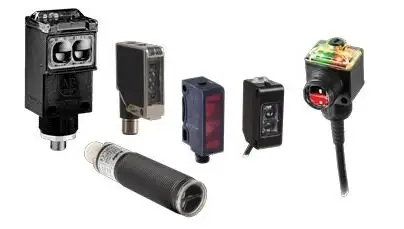
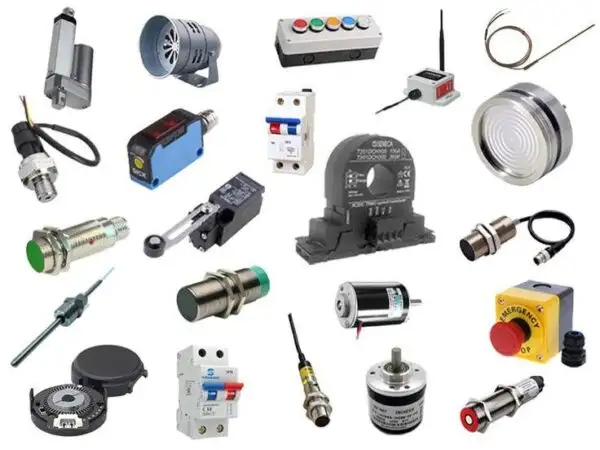
Panatech stands as the go-to destination for high-quality industrial sensors in UAE. Specializing in a vast array of solutions designed for automation, process control and safety applications, they offer everything from photoelectric, proximity and capacitive sensors to fibre optic, area and magnetic types. With sensors from globally trusted manufacturers in their arsenal, Panatech has become a vital part of several major industrial sectors in the UAE, including manufacturing, automotive, logistics, food processing and energy.

Every component supplied by Panatech has undergone rigorous testing, proving its ability to withstand harsh industrial environments and meet all relevant international quality standards.

In turn, these sensors are vital for detecting the presence or absence of objects, performing precise measurements and establishing safety interlocks to enhance operational efficiency. Beyond its impressive product line-up, Panatech distinguishes itself by offering expert technical assistance, swift delivery and custom sensor solutions. Their technical teams are always available to guide customers through the selection process, ensuring compatibility and long-term effectiveness. Through robust alliances in the UAE and Gulf Cooperation Council, Panatech has solidified its position as a leading distributor of industrial automation parts and continues to earn business through unmatched quality, affordability and customer service.
Comprehensive Range of Industrial Sensors Supplied by Panatech in the UAE

Proximity Sensors

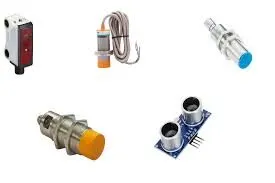
Panatech supplies a wide range of proximity sensors designed to detect nearby objects without making physical contact. These sensors are widely used in industrial automation, production lines, and machine control across the UAE. Whether you need inductive proximity sensors for detecting metal objects or capacitive proximity sensors for materials such as plastic, glass, wood, or liquids, Panatech offers reliable solutions for every application. Available in different sizes and sensing ranges, these sensors deliver accurate performance, long service life, and dependable operation.

Photoelectric Sensors

Panatech offers high-quality photoelectric sensors that use infrared or laser technology to detect objects, measure distance, and identify changes in position. They are commonly used in conveyor systems, packaging lines, and warehouse automation. Available in through-beam, retro-reflective, and diffuse models, these sensors provide fast response times and consistent performance, even in dusty or high-speed industrial environments.

Area Sensors

For applications that require wider detection coverage, Panatech supplies area sensors with multiple light beams for accurate monitoring. These sensors are ideal for machine safety, inventory handling, material positioning, and automated production systems. Their wide sensing area helps improve workplace safety while ensuring smooth and efficient industrial operations.

Fiber Optic Sensors

Panatech provides fiber optic sensors for applications where installation space is limited or high-precision detection is required. These sensors are commonly used in electronics manufacturing, pharmaceutical production, and precision assembly lines. Available with compatible sensor heads and amplifiers, they deliver stable and accurate performance even in environments with high temperatures or electrical interference.

Magnetic Sensors

Panatech offers reliable magnetic sensors for detecting magnetic fields, position, and movement in industrial equipment. They are widely used in automation systems, elevators, robotic equipment, and machinery. Designed to perform in dusty, oily, and wet environments, these sensors require minimal maintenance while providing dependable long-term performance.

Capacitive Sensors

Panatech supplies versatile capacitive sensors capable of detecting both metallic and non-metallic materials, including plastic, glass, powders, liquids, and wood. These sensors are commonly used in food processing, packaging, plastic manufacturing, and material handling applications. With adjustable sensitivity, compact designs, and multiple output options, they offer accurate and reliable detection for a wide range of industrial processes.

Why Sensors Are Essential in Industrial Automation

Industrial sensors are a key part of modern automation systems. They help machines and control systems detect, monitor, and respond to changes in real time, making industrial processes more accurate, efficient, and reliable. Whether it’s detecting an object on a conveyor, monitoring temperature or pressure, or sensing the position of a machine part, sensors play an essential role in keeping operations running smoothly.

By using industrial sensors, businesses can reduce manual errors, improve productivity, minimize downtime, and maintain consistent product quality. They are widely used across industries such as manufacturing, logistics, food processing, energy, and automation, where reliable monitoring and fast response are essential for daily operations.

Panatech is a trusted supplier of industrial sensors in the UAE, offering a comprehensive range of solutions, including proximity sensors, photoelectric sensors, area sensors, fiber optic sensors, magnetic sensors, and capacitive sensors. Every product is selected to deliver dependable performance, precision, and long service life in demanding industrial environments.

With expert technical support, prompt delivery, and a focus on quality, Panatech helps businesses find the right sensor solutions for their automation needs. Whether you’re upgrading an existing system or setting up a new production line, Panatech provides reliable industrial sensor solutions that improve efficiency, safety, and overall system performance.

Are the sensors supplied by Panatech branded or generic?

Panatech supplies both top global brands and select high-quality industrial sensors, depending on the application. Customers can request specific brand models.

What Are the Most Common Industrial Sensors Used in UAE Manufacturing?

The most common industrial sensors used in UAE manufacturing include temperature sensors, pressure sensors, proximity sensors, level sensors, flow sensors, and photoelectric sensors. These sensors help monitor processes, improve automation accuracy, enhance safety, and ensure efficient operation of industrial equipment. By providing real-time data and precise control, industrial sensors support better productivity and reliability across manufacturing facilities.

How to Choose the Right Sensor for Your Factory ?

Choosing the right sensor for your factory depends on factors such as the application requirements, operating environment, measurement type, accuracy, and compatibility with existing automation systems. Consider the type of data you need to monitor, whether it is temperature, pressure, position, level, or motion. Selecting reliable sensors with proper specifications helps improve efficiency, reduce downtime, and ensure smooth operation of industrial processes.

How Industrial Sensors Improve Production Efficiency ?

Industrial sensors improve production efficiency by providing real-time monitoring, accurate data collection, and automated control of manufacturing processes. They help detect faults, reduce machine downtime, improve product quality, and optimize resource usage. By enabling faster decision-making and precise automation, industrial sensors support smoother operations, increased productivity, and better overall performance in manufacturing environments.

Do Industrial Sensors Reduce Downtime and Costs?

Yes, industrial sensors help reduce downtime and operational costs by continuously monitoring equipment performance and detecting potential issues before failures occur. They enable predictive maintenance, improve process accuracy, and minimize unexpected breakdowns. By optimizing energy usage, reducing manual intervention, and improving overall efficiency, industrial sensors help industries achieve cost savings and more reliable operations.

How Long Do Industrial Sensors Last?

The lifespan of industrial sensors depends on the sensor type, operating environment, usage conditions, and maintenance practices. High-quality industrial sensors can typically provide reliable performance for several years when properly installed and maintained. Factors such as temperature, vibration, dust, and exposure to harsh conditions can affect durability, so choosing the right sensor for the application helps ensure longer service life and consistent performance.

Can Small Factories Afford Industrial Sensors?

Yes, small factories can afford industrial sensors by choosing solutions that match their specific operational needs and budget requirements. Industrial sensors are available in different types and price ranges, making them suitable for businesses of various sizes. By improving process efficiency, reducing downtime, and minimizing maintenance costs, industrial sensors can provide long-term value and support the growth of small manufacturing facilities.

What are the common types of industrial sensors UAE?

Sensor TypeApplicationKey Feature
Temperature SensorsHeat monitoringHigh accuracy
Pressure SensorsPressure measurementReliable performance
Proximity SensorsObject detectionNon-contact sensing
Level SensorsLiquid level detectionContinuous monitoring
Flow SensorsFlow rate measurementReal-time data

Panatech is a trusted provider of industrial sensors UAE, offering high-quality sensing solutions for a wide range of automation applications. As one of the leading sensor suppliers UAE, we supply reliable proximity sensors UAE, advanced Sensors UAE, and precision-engineered Fiber optic sensor UAE products that deliver accurate detection, improved efficiency, and dependable performance across manufacturing, packaging, and industrial automation systems.Panatech is a trusted sensor supplier in UAE, providing a comprehensive range of industrial sensors UAE for automation, manufacturing, and industrial applications. As one of the leading sensor suppliers UAE and a reliable sensor distributor UAE, we offer high-quality Sensors UAE, including automation sensors UAE and electronic sensors UAE from top sensor brands UAE. Our product range includes proximity sensors UAE, making us a dependable proximity sensor supplier UAE for proximity detection sensor UAE and automation proximity sensor UAE applications. We also supply photoelectric sensor UAE solutions as a trusted photoelectric sensor supplier in UAE, along with fiber optic sensor UAE products from a reliable fiber optic sensor supplier UAE. In addition, we provide magnetic sensor supplier UAE solutions and capacitive sensor UAE products to meet the diverse sensing requirements of industrial automation, ensuring accurate detection, reliable performance, and long-lasting operation.We all know how critical it is to stay on the cutting edge of industrial processes – real time monitoring and better control are absolutely vital. Luckily, with advanced industrial sensors likePhotoelectric sensor UAE systems, we have accurate object detection with the ability to provide repeatable, robust performance in virtually any industrial environment. If we can rely on a certified Fiber optic sensor supplier UAE we’re also talking very high-precision sensing that will work even in highly sensitive applications.industrial sensors UAEsensor suppliers UAEproximity sensors UAESensors UAEIndustrial Sensors UAEAutomation sensors UAEElectronic sensors UAESensor supplier in UAEASensor distributor UAEATop sensor brands UAEAPximity sensor supplier UAEAPximity detection sensor UAEAutomation proximity sensor UAEAPhotoelectric sensor UAEAPhotoelectric sensor supplier in UAEAFiber optic sensor UAEAFiber optic sensor supplier UAEAMagnetic sensor supplier UAEACapacitive sensor UAEPutting a modern factory on the map, incorporating Smart Systems, or automating a production process line with any automated control system for the future requiresPANATECH industrial sensors that deliver. Panatech offers reliable sensing solutions for various industrial automation applications, featuring Top sensor brands UAE for accurate and dependable performance. Our range includes Proximity detection sensor UAE solutions for contactless object detection, while our Photoelectric sensor supplier in UAE services provide suitable options for precise detection and counting tasks. We also supply Fiber optic sensor UAE solutions for applications requiring compact and flexible sensing, along with reliable Photoelectric sensor UAE products for efficient machine and process automation. The very accurate and reliable performance they offer has made them an industrial sensor supplier in the UAE that the industry can depend on for the success of your operations.1. Proximity SensorsAproximity sensor works by detects the proximity or absence of nearby objects without actually making physical contact. Their most common application in automation involves the tracking and counting of products on manufacturing or packing lines, detecting any items in danger of falling or interfering with the machinery, as well as for positioning and length control. There are three different varieties to choose from, including inductive proximity sensors (used for the detection of metallic objectssensors that only work on non-metallic objectsmagnetic sensors (which sense magnetic fields and are used with small magnets or special limit switches on machinery.2. Photoelectric SensorsPhotoelectric sensors are capable of sensing either an object’s presence/absence or an exact distance to the object by sending out a beam of infrared light or visible light to a target object. Their primary advantage is the ability to sense over longer distances than manyproximity sensors and their ability to detect both transparent as well as reflective objects. Typical uses include counting parts on conveyor systems or determining their height in a packaging system. Photoelectric sensors are typically offered as thefollowing :Photoelectric through-beam sensors - Transmitter and sensor are physically separate; they must have direct Line Of Sight for correct sensing. Photoelectric retro-reflective sensors - a signal is emitted and returned to the detector after bouncing off a reflector (most popular type for automation due to cost and reliability). Photoelectric diffuse-reflective sensors - an object is detected directly after the signal reflects off its surface (this style may require specific surface reflective characteristics and can also be less accurate with small objects).3. Area SensorsLike photoelectric sensors, an area sensor can detect presence and distance over long distances; however it has the capability to define a "detection area." A 2-D or 3-D area sensor is useful when you're unable to accurately place other types of industrial sensors due to inconsistency in position of the target object. They are commonly used in automated warehouses, security systems, and production lines to detect people or items entering a designated zone. With their broad coverage and high reliability, area sensors ensure both safety and productivity in complex industrial settings.4. Fiber Optic SensorsThese are highly accurate sensors in small packages used when you have very limited space in a system to perform detection or for measurement of extremely small components. Due to the fiber optic cables carrying light and not electricity from the sensor, fiber optic sensors have immunity to the adverse affects of magnetic fields, radio frequency interference and high temperatures making them ideal for manufacturing in clean room or other sensitive applications such as electronics, pharmaceuticals and food and beverage industries.5. Magnetic SensorsMagnetic sensors are designed to detect magnetic fields and therefore they are most commonly used for position and speed sensing of objects, rotation and revolution monitoring, or as simple limit switches in difficult environments (i.e., oil, dirt and moisture). These highly reliable devices are capable of operating in adverse environments and can be very suitable for industries like robotics, automotive and heavy machinery.6. Capacitive SensorsCapacitive sensors are designed to detect non-metallic materials as well as metallic items by sensing the changes in their dielectric value. These sensors can be used to measure material levels in tanks or silos of both solids and liquids, to inspect products or packaging and for detection of non-conductive plastics or other non-metallic materials. Comprehensive Guide to Industrial Sensors - Types, Applications, and InnovationsIntroduction to Industrial SensorsIn the era of Industry 4.0, industrial sensors are the backbone of automation, precision manufacturing, and smart factories. These sophisticated devices detect and measure physical quantities and convert them into signals that can be interpreted by monitoring systems or machinery. Whether it's ensuring safety, optimizing production, or collecting real-time data, industrial sensors play a pivotal role across industries like manufacturing, automotive, food processing, oil & gas, pharmaceuticals, and more. This article provides an in-depth explanation of the types of industrial sensors, their working principles, applications, and the latest innovations transforming the industrial landscape.1. What Are Industrial Sensors? An industrial sensor is a device that detects events or changes in the environment and sends the information to other electronics, usually a controller or processor. These sensors convert real-world physical parameters-like temperature, pressure, distance, or speed-into digital or analog data. Key Roles of Industrial SensorsMonitor production qualityImprove process efficiencyDetect errors or failuresMaintain safety protocolsEnable predictive maintenance2. Categories of Industrial SensorsIndustrial sensors come in various types based on their measuring capabilities and the nature of the object or condition they detect. Below are the most common categories:2.1 Proximity SensorsProximity sensors detect the presence or absence of an object without physical contact. Types:Inductive Sensors - For detecting metallic objects. Capacitive Sensors - For detecting non-metallic materials like plastics or liquids. Magnetic Sensors - Detect magnetic fields, usually with magnets or reed switches. Applications:Position sensingObject detection in assembly linesConveyor belt control2.2 Photoelectric SensorsThese sensors use light to detect objects, changes in surface conditions, or distance. Types:Through-Beam - Transmitter and receiver are placed opposite each other. Retro-Reflective - Uses a reflector to bounce light back to the receiver. Diffuse Reflective - The sensor receives the light reflected directly off the object. Applications:Package detectionObject countingSecurity systems2.3 Temperature SensorsMeasure the thermal energy of a system or surface. Types:ThermocouplesRTDs (Resistance Temperature Detectors)ThermistorsInfrared SensorsApplications:HVAC systemsPlastic moldingFood processing temperature control2.4 Pressure SensorsMeasure the pressure of gases or liquids. Types:Absolute Pressure SensorsGauge Pressure SensorsDifferential Pressure SensorsApplications:Hydraulic systemsPneumatic controlsOil & gas monitoring2.5 Level SensorsDetermine the level of substances (liquid or solid) inside a container or tank. Types:UltrasonicCapacitiveRadarOpticalApplications:Water treatment plantsChemical storageGrain silos2.6 Flow SensorsMeasure the rate of liquid or gas flow through a pipe or duct. Types:TurbineUltrasonicElectromagneticThermal Mass Flow MetersApplications:Chemical dosingGas pipelinesHVAC systems2.7 Vibration SensorsMonitor vibration patterns to detect abnormalities in mechanical systems. Types:Piezoelectric SensorsAccelerometersApplications:Predictive maintenanceCondition monitoring in motors and pumps2.8 Force and Load SensorsMeasure force, weight, or torque applied to an object. Types:Strain Gauge SensorsLoad CellsApplications:Industrial weighing systemsRoboticsTorque monitoring in assembly tools2.9 Humidity SensorsDetect moisture levels in the air. Applications:Paper and textile productionHVAC systemsClimate-sensitive manufacturing2.10 Gas and Chemical SensorsDetect the presence and concentration of gases or specific chemicals. Types:InfraredElectrochemicalCatalytic beadApplications:Environmental monitoringIndustrial safetyLaboratory settings3. Working Principles of Industrial SensorsDifferent types of sensors operate on different principles:Electromagnetic InductionUsed in inductive sensors to detect metallic objects. CapacitanceUsed in capacitive sensors for detecting proximity or level of non-metallic substances. Optical DetectionPhotoelectric sensors work by sensing changes in light intensity or reflection. Thermoelectric EffectThermocouples generate voltage proportional to temperature.Strain Gauges Found in force sensors and load cells – these convert resistance when under mechanical strain. Ultrasonic Waves Often utilized in level and proximity sensors, these sensors transmit and receive sound waves to calculate distance. 4. The Advantages of Using Industrial Sensors There are several advantages to deploying industrial sensors that significantly boost a company’s production, quality, and overall efficiency. 4.1 Increased Automation When sensors automate important operations, the need for human interaction diminishes. 4.2 Improved Safety Gas sensors, temperature detectors, and proximity alarms work in tandem to create a safer working environment. 4.3 Predictive Maintenance Condition sensors, like vibration monitors, aid in the proactive analysis and prevention of potential equipment failure. 4.4 Real-Time Monitoring Enables data collection for PLCs, SCADA systems, and IoT dashboards to facilitate timely decision-making. 4.5 Enhanced Product Quality High precision provided by sensors reduces defects and increases uniformity of output. 5. Industrial Sensor Applications Across Diverse Industries 5.1 Manufacturing and Robotics Used to ensure quality on production lines, assist with robotic arm placement, and control automated assembly processes. 5.2 Automotive Industry Used to guarantee safety and product quality in vehicles-including airbag sensors, speed sensors, and more. 5.3 Oil & Gas The measurement of pressure, temperature, and gases is vital in refining operations and pipeline monitoring. 5.4 Food and Beverage Sensors that monitor temperature, humidity, and levels help maintain hygienic and quality standards. 5.5 Pharmaceuticals Since precision is paramount in the development of medicines, sensors are essential for cleanroom conditions, accurate dosage measurements, and more. 5.6 Agriculture Soil moisture sensors, temperature detectors, and weather monitoring systems help to regulate irrigation and monitor the health of crops. 6. Emerging Trends in Industrial Sensors The fast pace of industrial digitization has led to rapid advancements in sensor technology. 6.1 Smart Sensors These combine sensor elements with signal processing and communication capabilities, allowing for self-calibration, fault diagnosis, and wireless communication. 6.2 IoT Integration Sensors are now a core component of the Internet of Things (IoT) infrastructure, relaying real-time data to cloud platforms. 6.3 Wireless Sensors By eliminating the need for costly wiring, wireless sensors streamline retrofitting in existing plants. 6.4 Miniaturization Sensors have become significantly smaller, enabling their integration into compact electronic devices and micro-machines. 6.5 Artificial Intelligence and Machine Learning When coupled with AI, sensors can predict equipment failure, optimize work processes, and improve the interaction between humans and machines.

Leave a Reply

Your email address will not be published. Required fields are marked *

Comments

  1. We are very satisfied with the products and services provided. The quality, reliability, and performance of the automation solutions exceeded our expectations. The team offered excellent support and ensured smooth installation and operation. A trusted partner for high-quality industrial solutions.