Table of Contents

Servo motors supplier UAE

PANATECH is the one-stop supplier for high performance servo motors in the UAE. PANATECH offers servo motors with superior performance and precision required in Industrial Automation, Robotics, CNC Machines, motion control, and various automation projects. We provide a wide range of AC and DC Servo Motors including Brushless Servo Motors, and Precision Servo Motors from renowned manufacturers like Delta, Mitsubishi, Siemens, Panasonic, Yaskawa, Schneider Electric etc. To ensure high torque control and quick response and durability for smooth automation.

PANATECH is the leading servo motors suppliers in the UAE, providing best of the product range, reasonable prices, on-time delivery to all the Emirates like Dubai, Sharjah, Abu Dhabi and Ajman with total customer support for a complete automation solutions including system integration. PANATECH not just supply, but install the servo motors along with a complete motion control system as part of factory automation, conveyor systems, packaging machines etc.
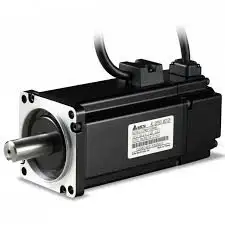
Types of Servo Drives

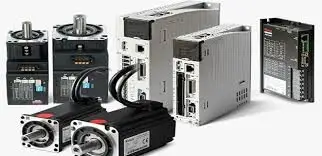
Servo drives control the speed, position, and movement of servo motors, making them an essential part of modern automation systems. Different types of servo drives are available to suit various industrial applications.

1. AC Servo Drives

AC servo drives are the most widely used in industrial automation. They provide high accuracy, fast response, and reliable performance, making them ideal for CNC machines, robotic systems, and automated production lines.

2. DC Servo Drives

DC servo drives operate using direct current and are commonly used in smaller automation systems and robotics. They offer a simple design and are a cost-effective solution for applications that require basic motion control.

3. Digital Servo Drives

Digital servo drives use advanced digital communication methods such as pulse signals, Ethernet, or CANopen. They deliver precise motion control, easy programming, and seamless integration with PLCs and modern automation systems.

4. Analog Servo Drives

Analog servo drives receive analog control signals such as ±10V or 4–20mA. They are commonly found in older machinery and simpler control systems where advanced digital communication is not required.

5. Integrated Servo Drives

Integrated servo drives combine the motor and drive into a single compact unit. This design saves installation space, reduces wiring, and simplifies machine design, making them ideal for compact automation equipment.


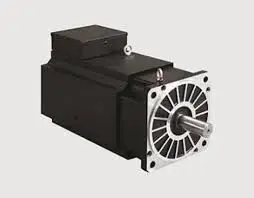
Types of Servo Motors

Servo motors are designed to provide accurate speed, position, and torque control. They are widely used in industrial automation, robotics, packaging, and precision machinery.

1. AC Servo Motors

AC servo motors are known for their smooth operation, high efficiency, and excellent speed control. They are commonly used in CNC machines, conveyor systems, and industrial robots where precision is essential.

2. DC Servo Motors

DC servo motors offer quick response and simple control, making them suitable for smaller machines, educational projects, and light-duty automation applications.

3. Brushless DC Servo Motors (BLDC)

BLDC servo motors use electronic commutation instead of brushes, resulting in higher efficiency, quieter operation, longer service life, and very low maintenance. They are widely used in medical equipment, drones, and advanced industrial automation.

4. Brushed DC Servo Motors

Brushed DC servo motors feature a simple and affordable design. They provide reliable performance for many applications, although the brushes require periodic maintenance as they wear over time.

5. Linear Servo Motors

Unlike conventional motors that produce rotary motion, linear servo motors generate direct linear movement. They are ideal for high-speed positioning systems, semiconductor manufacturing, and precision pick-and-place applications.

6. Synchronous Servo Motors

Synchronous servo motors operate with the rotor moving in perfect synchronization with the magnetic field. They deliver excellent accuracy, stability, and consistent performance for demanding industrial processes.

7. Asynchronous (Induction) Servo Motors

Asynchronous servo motors are durable, economical, and suitable for applications where ultra-high precision is not required. They are often used in general industrial machinery and automation systems that require dependable performance.

How Servo Drives and Motors Work Together for Intelligent Motion Control

Servo Drives and Servo Motors for Precision Motion Control

Servo drives and servo motors are key components in modern automation systems. They work together to provide accurate control of speed, position, and torque, making them ideal for applications that require precision and reliability. Unlike standard motors, servo motors can move to an exact position and maintain it with great accuracy. This makes them a popular choice for CNC machines, robotic arms, conveyor systems, packaging equipment, and other automated machinery.

Panatech is a trusted servo motors supplier in the UAE, offering high-quality solutions for industrial automation and motion control. We provide advanced motion control systems in the UAE that help businesses improve productivity, efficiency, and machine performance. Our solutions are designed for easy integration and dependable operation across a wide range of industries.

A servo drive works alongside the servo motor by receiving commands from a PLC or motion controller. It controls the voltage and current supplied to the motor, ensuring the required speed, position, or torque is achieved. At the same time, the motor’s encoder or resolver continuously sends feedback to the drive. This closed-loop system allows the drive to make instant adjustments whenever needed, ensuring smooth, accurate, and consistent movement.

Another major advantage of servo systems is their energy efficiency and built-in protection. Servo drives supply only the power required for the current load, helping reduce energy consumption and operating costs. They also include safety features such as overload protection, thermal monitoring, and short-circuit protection to safeguard both the motor and connected equipment. This improves system reliability, reduces maintenance, and extends equipment life.

Together, servo drives and servo motors create a powerful motion control solution for industries that demand high precision and dependable performance. They are widely used in manufacturing, packaging, electronics, printing, medical equipment, and industrial automation. With fast response times, accurate positioning, and reliable operation, servo systems continue to play an essential role in today’s advanced manufacturing environments.

Why choose Panatech for servo motors?

Panatech provides high-quality, durable, and energy-efficient servo motors with precise control, excellent speed regulation, and long service life. Their solutions are backed by expert support and reliable after-sales service in the UAE.

How Much Does a Quality Servo Motor Cost?

The cost of a servo motor depends on its power rating, brand, features, and application. Small models are generally more affordable, while high-performance industrial servo motors cost more. It’s best to choose a motor based on your system requirements rather than price alone.

How Long Do Servo Motors Typically Last?

A quality servo motor can typically last 10 to 15 years or more with proper installation, regular maintenance, and normal operating conditions. Proper use helps maximize its performance and lifespan.

How Do I Know If My Servo Motor Is Failing?

Common signs include unusual noise, overheating, vibration, loss of accuracy, reduced speed, or frequent error alarms. If you notice these issues, it’s a good idea to have the motor inspected or serviced.

Are Servo Motors Worth the Investment?

Yes. Servo motors offer high precision, better efficiency, faster response, and long-term reliability, making them a cost-effective choice for many industrial automation applications.

Can servo motors run continuously?

Yes, quality servo motors are designed for continuous operation when used within their rated limits.

What industries use servo motors?

Servo motors are widely used in manufacturing, robotics, packaging, CNC machines, printing, and automation systems.

What are the key features of servo motors supplier UAE?

FeatureDescriptionBenefit
High PrecisionAccurate position and speed controlImproved operational efficiency
Fast ResponseQuick start and stop capabilitiesIncreased productivity
Energy EfficiencyOptimized power consumptionReduced operational costs
Compact DesignSpace-saving motor constructionEasy integration
High Torque OutputStrong performance under loadReliable industrial operations

Leave a Reply

Your email address will not be published. Required fields are marked *

Comments

  1. We purchased servo motors from Panatech, and the quality has been excellent. The motors perform smoothly, delivery was fast, and the support team was very helpful. Highly recommended!

As is so clearly established here above, a good selection of servo systems UAE are paramount for all the different industrial sectors. This sort of automation system is indispensable where speed regulation, reliable performance and precise motion control are needed. These are used extensively in CNC machinery, packaging systems and many other manufacturing operations to boost the production performance. When such good servo control system are used, it enhances the accuracy and smooth running of production and significantly cuts down the time loss due to system breakdowns. Servo motors supplier UAE Servo drive supplier UAE Servo motor and drive supplier UAE Servo motor distributor UAE Servo drive distributor UAE Industrial servo motor supplier UAE Industrial servo drive supplier UAE Servo control system supplier UAE Motion control systems UAE Precision servo motors UAE AC servo motor supplier UAE DC servo motor supplier UAE Brushless servo motor supplier UAE High-performance servo motors UAE Compact servo drive suppliers UAE Servo drive suppliers UAE Servo motor and drive suppliers UAE Servo motor distributors UAE operational efficiency, improving safety, and reducing manual errors in industrial setups. Modern HMIs are extremely sophisticated and can communicate with programmable logic controllers (PLCs), sensors, SCADA, and even the cloud. It provides the operator with features like remote access, alarm history, data trend logs, and diagnostic capability. HMIs may be used to: • Operate and monitor the equipment • Set parameters and variables • Display trends and alarms • Access diagnostic functions and records HMI interfaces include button type, full-color touch screen and mobile or web interfaces. HMIs are commonly used in such industries as oil and gas, water and wastewater, manufacturing, packaging, food and beverage, energy, and many more. A complete integrated HMI ensures easy and fluid operations and central control, providing operators, technicians and managers with precise and rapid control decisions. Title: The Complete Guide to Human Machine Interface (HMI): Importance, Types, and Applications Intro As the world moves towards industrial automation and smart factories, humans and machines work closely together. Today, the interface between these two entities is the human-machine interface (HMI). Used extensively in plants, power stations, labs and building automation systems, HMI is an important control and management component for any piece of machinery. The advancement of the digital era has made it essential for HMIs to be easy-to-use and extremely responsive and effective. What is HMI (Human Machine Interface)? Servo motors supplier UAE Servo motors supplier UAE Servo motors supplier UAE Servo motors supplier UAE Servo motors supplier UAEVVV Servo motors supplier UAE Servo motors supplier UAE Servo motors supplier UAE Servo motors supplier UAE Servo motors supplier UAE Servo motors supplier UAE VV Servo motors supplier UAE Servo motors supplier UAE Servo motors supplier UAE Servo motors supplier UAEV Servo motors supplier UAE Servo motors supplier UAE Servo motors supplier UAE Servo motors supplier UAE Servo motors supplier UAEServo motors supplier UAEV Servo motors supplier UAE Servo motors supplier UAE Servo motors supplier UAE Servo motors supplier UAE Servo motors supplier UAE Servo motors supplier UAE Servo motors supplier UAE Servo motors supplier UAE Servo motors supplier UAE Servo motors supplier UAE Servo motors supplier UAE Servo motors supplier UAE VVV Servo motors supplier UAE Servo motors supplier UAE Servo motors supplier UAE Servo motors supplier UAE . Why HMI is Essential in Modern Industries Why Use Servo Drives and Servo Motors in Automation Systems? Servo drives and servo motors are the driving force behind modern industries' precision motion control systems. Whether it’s robotic assembly lines, packaging equipment, CNC machines, or automated conveyor belts, these components guarantee fast and incredibly accurate movements. In an age of increasing technological advancement, the ever-growing demand for high-speed, precise, and energy-efficient control systems has pushed servo systems to the forefront of industrial innovation. At their simplest, servo systems are made up of two crucial elements: the servo motor and the servo drive. The motor is responsible for actual physical motion, while the drive acts as its smart conductor. Unlike their conventional motor counterparts, servo systems work through a closed-loop mechanism. This entails that information about the motor’s actual position, speed, or torque is constantly sent back to the drive, which then fine-tunes its output in real-time to match the target movement. This continuous feedback loop is what makes servo systems so remarkably accurate and dependable. What Is a Servo Motor? A servo motor is an electro-mechanical device built to achieve extremely accurate rotation or motion. It takes electrical energy and translates it into physical movement, making it perfect for applications that require precise regulation of angular or linear position, speed, and torque. Servo motors are frequently seen in various sectors, including automation, robotics, printing, and textiles, to name a few. Depending on their structure, commutation, and suitable applications, servo motors can be categorized into various types: AC servo motors, DC servo motors, brushed DC servo motors, brushless DC servo motors, and linear servo motors. For instance, brushless DC motors are favored for their enhanced efficiency, quieter operation, and longer lifespan, especially in high-precision environments like robotics and drones. Many servo motors also come equipped with position sensors such as encoders or resolvers for real-time feedback to the drive. What Is a Servo Drive? A servo drive is the electrical component that supplies power to and controls the servo motor. The drive takes input commands from a central controller or Programmable Logic Controller (PLC) and dictates how much electricity the motor needs to produce the desired motion. It leverages the feedback from the motor to make instantaneous adjustments to power delivery, ensuring the motion is smooth, accurate, and within safe operating limits. Servo drives are available in several types, including analog, digital, and integrated configurations. Digital servo drives, in particular, offer more advanced functionality like configurable parameters, diagnostic tools, and the ability to communicate with industrial networks using protocols like EtherCAT, CANopen, or Modbus. Motion control systems UAE Motion control systems UAE The Importance of Closed-Loop Control A key feature of a servo system is its closed-loop control setup. In this arrangement, a feedback device, typically an encoder, transmits information about the motor’s performance to the servo drive. The drive then compares this real-time data with the commanded values from the controller. If it detects any discrepancy, it immediately adjusts the amount of power delivered to the motor to correct the motion. This feedback mechanism is the reason why servo systems provide unparalleled precision, consistency, and a dynamic response rate. It also allows the system to automatically adjust to external disturbances, varying loads, and even mechanical wear that might occur over time. Consequently, closed-loop control not only improves accuracy but also prolongs the lifespan of automated equipment. Types of Servo Motors Servo motors can be classified based on their design, commutation method, and best applications: 1. AC Servo Motors Designed to operate with alternating current, AC servo motors are widely employed in industrial settings where high speed and strong torque are essential. They deliver superior performance for prolonged tasks and heavy loads, making them suitable for applications like CNC machinery, elevators, and large-scale conveyors. 2. DC Servo Motors Operating with direct current, these motors are generally used in lower-power applications. While they offer decent torque and speed control, they do require periodic maintenance due to the friction caused by their brushes. 3. Brushless DC Servo Motors (BLDC) These motors eliminate mechanical brushes and commutators, replacing them with electronic commutation. The result is a more energy-efficient, quiet, and durable motor. BLDC motors are a common choice for robotics, drones, and other applications demanding high-precision movements. 4. Brushed DC Servo Motors Although simpler and more economical, brushed motors have a shorter service life owing to brush wear. They are still utilized in basic automation where the highest level of performance is not paramount. 5. Linear Servo Motors Instead of generating rotation, linear servo motors produce direct linear motion. They are often found in applications like high-speed pick-and-place machines, semiconductor manufacturing equipment, and material handling systems. Types of Servo Drives Servo drives are categorized by their technology and the level of integration: 1. Analog Servo Drives These older drives use voltage or current signals to command the motor. While less flexible and lacking advanced diagnostic features, they are still in use in some older systems. 2. Digital Servo Drives Modern digital drives utilize microcontrollers for signal processing, offering programmable parameters, real-time diagnostics, and networking capabilities over various industrial protocols. They are ideal for today's complex automation challenges. 3. Integrated Servo Drives In this configuration, the servo motor and the drive are combined into a single unit. This minimizes wiring, saves space, and simplifies installation, making them perfect for compact or modular equipment. 4. Networked Servo Drives Supporting communication protocols like EtherCAT, Profinet, or CANopen, these drives seamlessly integrate into distributed control systems and excel in providing synchronized motion control. Advantages of Servo Drives and Motors The combined benefits of servo drives and motors offer significant advantages for industrial automation: 1. High Precision and Accuracy Due to their closed-loop nature, servo systems ensure exact control over position, speed, and torque, making them suitable for delicate operations like surgical robotics or PCB manufacturing. 2. Energy Efficiency Servo drives only deliver the precise power required at any given moment, significantly reducing energy consumption. They also feature regenerative braking, which recovers and returns energy to the system. 3. Fast Response Time With instant feedback and control, servo systems can achieve rapid start, stop, and reversal of motion, essential for applications like high-speed sorting and automated testing. 4. Reliability and Longevity Servo systems are designed for continuous operation and require minimal maintenance, especially in their brushless variants. They offer extended service life, minimizing downtime. 5. Flexibility and Scalability Modern servo systems can be readily customized and expanded to meet diverse application needs. Programmable parameters and network communication facilitate easy integration. Applications of Servo Systems Servo drives and motors are implemented across a broad spectrum of industries, including: Industrial Automation: Conveyor systems, robotic arms, pick-and-place robots CNC Machinery: Mills, lathes, laser cutters Textile Machinery: Precision spinning and weaving machines Printing: High-speed, high-resolution printing systems Medical Equipment: Surgical robots, diagnostic machines Packaging: Wrapping, sealing, and labeling machines Selecting the Right Servo System Choosing the appropriate servo motor and drive hinges on a clear understanding of your application’s requirements, such as: Load Type and Size: Dictates required torque and power capacity Speed Range: High-speed applications require faster acceleration motors Precision Needs: Demands high-accuracy encoders and fine-tuned control Environment: Considerations for dust, moisture, temperature, and vibration Integration Requirements: Communication protocols, available space, and connectivity options Maintenance and Troubleshooting While servo systems are built for endurance, a few maintenance practices can enhance their reliability: Periodically inspect encoder signals for any inaccuracies. Monitor drive parameters for emerging trends or faults. Ensure all connections are clean and secure. Update the firmware on digital servo drives when available. In addition, advanced servo drives also deliver diagnostic data that aids in predictive maintenance, helping to reduce costly, unexpected downtime. The Future of Servo Technology With the ongoing shift toward Industry 4.0, servo systems are rapidly transforming into smarter, more integrated components of industrial ecosystems. Their convergence with AI and machine learning is enabling the creation of predictive motion control systems and machines that can self-optimize their behavior. The evolution also includes advances in wireless servo systems, edge computing and safety protocols. As automation moves toward being more intelligent and decentralized, servo drives and motors will continue to be a critical part of reliably, precisely and flexibly automating motion in various applications. Conclusion Servo drives and servo motors serve as the building blocks of today's motion control systems. Their inherent precision, responsiveness, and adaptability are what make them the essential elements for everything from powering robotic scalability to increasing energy savings and long-term reliability within any automated industrial environment. Real-Time Monitoring and Control HMI systems allow operators to observe and command industrial processes in real-time. Access to performance data, visual alarms, and operating statuses immediately allows users to resolve issues, which results in minimized downtime and increased productivity. Improved Operational Efficiency Through a straightforward interface and intuitive graphics, HMIs make operating complex machinery and tasks less demanding. This facilitates a faster learning curve, streamlines operations, and decreases training expenses for new personnel. Enhanced Safety and Compliance HMIs are built to immediately notify operators of any anomalies or danger. Integrated security and fail-safe designs ensure prompt action to avert accidents, making workspaces safe and compliant. Data Acquisition and Analysis Contemporary HMIs can log past data, display trends, and produce reports that are useful for preventive maintenance, quality control, and optimization. Customization and Scalability HMIs are tailored to the specific requirements of different industries, whether you need a solution for a single machine or an entire factory. Types of HMIs There are a variety of HMI types to suit diverse applications and integration needs: Push-Button Replacer Panels: Basic systems that replace manual push buttons and indicator lights with a digital display for operations and status. Graphical HMIs: Utilize screens with colorful graphics, icons, and images to visually represent equipment and processes, supporting touch interaction. PC-Based HMIs: Employ industrial PCs for robust processing and graphics, supporting advanced functions like remote access, ERP integration, and real-time data analytics. Web-Based HMIs: Accessed through a web browser, allowing remote monitoring and control for dispersed systems. Mobile HMIs: Run on portable devices such as tablets and smartphones for flexible and mobile operations, popular in smart factories. Categories of HMI Interfaces: Touch Screen Panels: Most commonly used in industries today, offering direct and interactive control through touch input. Keypad Interfaces: Used in harsh environments where durability is key, typically in older or more rugged industrial systems. Computer-Based Interfaces: desktop-based applications designed to oversee and control complex systems, enabling multitasking and handling large data volumes. Voice-Controlled Interfaces: Emerging technology, particularly for hands-free operations, using AI to understand voice commands. Wearable HMIs: Used in specific, niche environments such as augmented reality for remote assistance, providing hands-free access to control systems.