Table of Contents

Servo motors supplier UAE

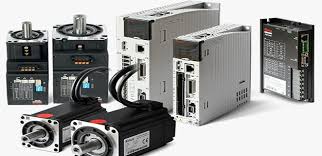
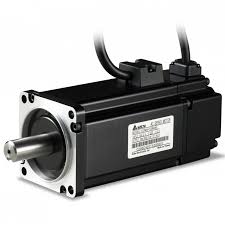
PANATECH is a trusted name when it comes to supplying high-performance servo motors in the UAE. We provide top-quality servo motor solutions tailored to meet the demanding needs of industrial automation, robotics, CNC machinery, and motion control applications. Whether you’re looking for AC, DC, brushless, or precision servo motors, PANATECH ensures reliable products sourced from globally recognized brands such as Delta, Mitsubishi, Siemens, Panasonic, Yaskawa, and Schneider Electric. Our motors offer excellent torque control, high responsiveness, and exceptional durability for seamless automation.

As a leading servo motors supplier in the UAE, PANATECH stands out with its commitment to technical support, competitive pricing, and fast delivery across the Emirates — including Dubai, Sharjah, Abu Dhabi, and Ajman. We not only supply the products but also offer complete motion control system solutions, ensuring you get efficient performance and integration with your existing automation systems. Whether for factory automation, conveyor systems, or packaging machines, PANATECH is your go-to expert for servo motor technology in the UAE.
🔌 Types of Servo Drives

Servo drives control and power the servo motors. Based on operation and configuration, servo drives can be classified into the following main types:


1. AC Servo Drives
  • Power Source: Alternating Current (AC)

  • Common Use: Industrial automation, CNC machinery

  • Features: High precision, better for high-speed applications

  • Brands: Panasonic, Yaskawa, Mitsubishi


2. DC Servo Drives
  • Power Source: Direct Current (DC)

  • Common Use: Robotics, small automated equipment

  • Features: Simple structure, lower cost, but less efficient than AC drives


3. Digital Servo Drives
  • Control Signal: Digital (Pulse, Ethernet, CANopen, etc.)

  • Features: Programmable, highly accurate, better for modern automation systems

  • Application: PLC-controlled and industrial motion systems


4. Analog Servo Drives
  • Control Signal: Analog (±10V, 4-20mA)

  • Features: Used in older systems or simple applications

  • Limitation: Less flexibility compared to digital drives


5. Integrated Servo Drives
  • Design: Combines motor and drive into one unit

  • Advantage: Space-saving, easy installation

  • Ideal For: Compact automation setups


⚙️ Types of Servo Motors

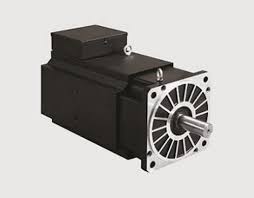
Servo motors are electromechanical devices used for precise motion control. Here are the primary types:


1. AC Servo Motors
  • Power: Runs on AC voltage

  • Advantages: Smooth motion, better torque-speed characteristics

  • Used In: Robotics, CNC machinery, conveyor systems


2. DC Servo Motors
  • Power: Runs on DC voltage

  • Advantages: Quick response, good for low-power applications

  • Used In: Toy motors, basic robotics, low-speed systems


3. Brushless DC Servo Motors (BLDC)
  • Structure: No brushes; uses electronic commutation

  • Advantages: High efficiency, low maintenance, long lifespan

  • Used In: Drones, medical devices, automation machinery


4. Brushed DC Servo Motors
  • Structure: Uses brushes for commutation

  • Advantages: Simple design, cost-effective

  • Limitations: Higher maintenance due to brush wear


5. Linear Servo Motors
  • Motion: Direct linear motion instead of rotational

  • Advantages: No mechanical transmission needed

  • Used In: Semiconductor manufacturing, high-speed pick-and-place systems


6. Synchronous Servo Motors
  • Operation: Rotor speed matches stator’s magnetic field

  • Advantages: High precision and stability

  • Common Use: High-performance control systems


7. Asynchronous (Induction) Servo Motors
  • Operation: Rotor speed lags stator field (not synchronized)

  • Advantages: Rugged and cost-effective

  • Used In: Lower precision applications where cost is a factor

🧠 How Servo Drives and Motors Work Together for Intelligent Motion Control

Servo drives and servo motors are essential components in modern automation systems, designed to deliver precise control of motion. The primary role of a servo motor is to provide accurate positioning, controlled speed, and reliable torque output. Unlike traditional motors, servo motors can move to a specific position and hold it with precision, which is crucial in applications like CNC machines, robotic arms, and conveyor systems. This high level of accuracy is made possible through the feedback system built into the motor, typically using an encoder or resolver that constantly monitors its position and sends real-time data back to the controller.

Pulse Control is a trusted servo motors supplier in the UAE, providing high-performance solutions for automation and industrial applications. We specialize in motion control systems in the UAE that deliver precision, efficiency, and reliability across diverse industries. With a commitment to quality and innovation, Pulse Control ensures seamless integration of servo technology and advanced motion systems to enhance productivity and performance.

A servo drive works in conjunction with the servo motor to regulate its motion based on command inputs. The drive receives signals from a PLC or motion controller that specify the desired position, speed, or torque. It then supplies the correct voltage and current to the motor to execute these commands efficiently. What makes the system powerful is its closed-loop operation: the drive continuously receives feedback from the motor and compares it with the desired output. If there is any deviation, it makes instant corrections, ensuring smooth, responsive, and accurate movement at all times.

Another critical advantage of using servo drives and motors is energy efficiency and operational safety. The drive intelligently adjusts power according to the system’s load demand, preventing unnecessary energy consumption and wear. Additionally, it offers protective functions such as overload detection, short-circuit protection, and thermal monitoring, safeguarding both the motor and the application. This intelligent control system extends the lifespan of equipment and ensures uninterrupted production, especially in high-performance industrial environments.

Together, the servo drive and servo motor form the core of a highly responsive motion control system. They are indispensable in industries that require high precision and reliability, such as packaging, electronics manufacturing, printing, medical devices, and automation engineering. Their ability to provide real-time corrections and maintain stability under varying conditions makes them far superior to traditional motor systems. As technology evolves, servo systems continue to be the backbone of advanced, intelligent manufacturing.

Why choose Panatech for servo motors?

Panatech provides high-quality, durable, and energy-efficient servo motors with precise control, excellent speed regulation, and long service life. Their solutions are backed by expert support and reliable after-sales service in the UAE.

Servo motors supplier UAE Servo drive supplier UAE Servo motor and drive supplier UAE Servo motor distributor UAE Servo drive distributor UAE Industrial servo motor supplier UAE Industrial servo drive supplier UAE Servo control system supplier UAE Motion control systems UAE Precision servo motors UAE AC servo motor supplier UAE DC servo motor supplier UAE Brushless servo motor supplier UAE High-performance servo motors UAE Compact servo drive suppliers UAE Servo drive suppliers UAE Servo motor and drive suppliers UAE Servo motor distributors UAE operational efficiency, improving safety, and reducing manual errors in industrial setups. Modern HMIs are highly advanced and can connect with programmable logic controllers (PLCs), sensors, SCADA systems, and even cloud They features like remote access, alarm logging, data trending, and diagnostics. HMIs can range from simple button-based interfaces to full-color touchscreens and mobile/web-based interfaces. They are widely used in industries such as oil & gas, water treatment, manufacturing, packaging, energy, and more. A well-integrated HMI not only streamlines operations but also provides a centralized control system that empowers operators, technicians, and supervisors to make informed decisions quickly and efficiently. Title: The Complete Guide to Human Machine Interface (HMI): Importance, Types, and Applications Introduction In the evolving world of industrial automation and smart manufacturing, the Human Machine Interface (HMI) plays a pivotal role in bridging the gap between operators and machines. Whether in factories, power plants, laboratories, or building automation systems, HMI systems are essential for the smooth operation, monitoring, and control of machinery. As the digital age continues to transform industries, the need for intuitive, responsive, and efficient HMIs has become more pronounced than ever. This comprehensive guide explores what HMIs are, their importance. What is HMI (Human Machine Interface)? Servo motors supplier UAE Servo motors supplier UAE Servo motors supplier UAE Servo motors supplier UAE Servo motors supplier UAEVVV Servo motors supplier UAE Servo motors supplier UAE Servo motors supplier UAE Servo motors supplier UAE Servo motors supplier UAE Servo motors supplier UAE VV Servo motors supplier UAE Servo motors supplier UAE Servo motors supplier UAE Servo motors supplier UAEV Servo motors supplier UAE Servo motors supplier UAE Servo motors supplier UAE Servo motors supplier UAE Servo motors supplier UAEServo motors supplier UAEV Servo motors supplier UAE Servo motors supplier UAE Servo motors supplier UAE Servo motors supplier UAE Servo motors supplier UAE Servo motors supplier UAE Servo motors supplier UAE Servo motors supplier UAE Servo motors supplier UAE Servo motors supplier UAE Servo motors supplier UAE Servo motors supplier UAE VVV Servo motors supplier UAE Servo motors supplier UAE Servo motors supplier UAE Servo motors supplier UAE Why HMI is Essential in Modern Industries Why Use Servo Drives and Servo Motors in Automation Systems? Servo drives and servo motors are at the core of precision motion control systems in modern industries. From robotic assembly lines to packaging systems, CNC machines to automated conveyor belts, these components ensure that every movement is not only fast but also highly accurate. As technology continues to advance, the demand for high-speed, precise, and energy-efficient control systems grows, placing servo systems at the forefront of industrial innovation. At their most basic, servo systems consist of two integral components: the servo motor and the servo drive. The motor is responsible for physical movement, while the drive acts as its intelligent controller. Unlike conventional motors, servo systems operate in a closed-loop format. This means that feedback from the motor’s position, speed, or torque is constantly sent back to the drive, which in turn adjusts its output in real time to match the desired motion. This continuous feedback loop is what makes servo systems exceptionally precise and reliable. What Is a Servo Motor? A servo motor is an electromechanical device designed to rotate or move with high accuracy. It converts electrical energy into mechanical movement, making it ideal for applications requiring precise control of angular or linear position, speed, and torque. Servo motors are widely used in automation, robotics, printing, textiles, and many other sectors. There are several types of servo motors, including AC, DC, brushed, and brushless variants. Brushless DC motors, for exa motors are often equipped with sensors such as encoders or resolvers that provide position feedback to the drive. What Is a Servo Drive? A servo drive is the electronic device that powers and controls the servo motor. It receives command signals from a central controller or PLC (Programmable Logic Controller) and determines how much voltage and current should be supplied to the motor to achieve the desired movement. The drive uses the feedback from the motor to adjust its output dynamically, ensuring the motion is smooth, accurate, and within safe operating limits. Servo drives come in various forms, including analog, digital, and integrated models. Digital servo drives, in particular, offer advanced features like programmable parameters, diagnostic tools, and communication with industrial networks via protocols such as EtherCAT, CANopen, or Modbus. Motion control systems UAE Motion control systems UAE The Importance of Closed-Loop Control One of the defining characteristics of a servo system is its closed-loop control architecture. In this configuration, feedback devices such as encoders relay data about the motor’s actual performance back to the servo drive. The drive compares this real-time information with the target values received from the controller. If there’s any deviation, it instantly adjusts the power going to the motor to correct the movement. This feedback mechanism ensures that servo systems offer unparalleled precision, repeatability, and dynamic response. It also enables the system to detect and compensate for external disturbances, load changes, and mechanical wear over time. As a result, closed-loop control enhances both the reliability and lifespan of automated machinery. Types of Servo Motors Servo motors are categorized based on their construction, commutation method, and application suitability. The most common types include: 1. AC Servo Motors AC servo motors operate on alternating current and are commonly used in industrial applications where high speed and torque are needed. They offer better performance for high-power and long-duration tasks, making them ideal for CNC machines, elevators, and large conveyors. 2. DC Servo Motors These motors operate on direct current and are typically used in low-power applications. They provide good torque and speed control but require regular maintenance due to the wear of brushes. 3. Brushless DC Servo Motors (BLDC) BLDC motors eliminate the mechanical commutator and brushes, replacing them with electronic commutation. This results in a more efficient, quieter, and longer-lasting motor. They are widely used in robotics, drones, and other precision-driven sectors. 4. Brushed DC Servo Motors Brushed motors are simpler and less expensive but have a shorter lifespan due to brush wear. They are still used in basic automation systems where high performance is not essential. 5. Linear Servo Motors Instead of producing rotational motion, linear servo motors create direct linear displacement. They are often used in semiconductor manufacturing, high-speed pick-and-place machines, and material handling systems. Types of Servo Drives Servo drives are also classified according to their technology and integration: 1. Analog Servo Drives Analog drives are older and use voltage or current signals to control the motor. They are less flexible and lack advanced diagnostics but are still found in legacy systems. 2. Digital Servo Drives Digital drives process signals using microcontrollers and offer programmable settings, real-time diagnostics, and network communication. They are preferred for modern, complex automation applications. 3. Integrated Servo Drives In integrated systems, the drive and motor are housed in a single unit. This reduces wiring, saves space, and simplifies installation. Such systems are ideal for compact or modular machinery. 4. Networked Servo Drives These drives support communication protocols like EtherCAT, Profinet, and CANopen. They can be easily integrated into distributed control systems and offer advanced synchronization features. Advantages of Servo Drives and Motors The combined benefits of servo drives and motors are extensive and cover all critical aspects of industrial automation: 1. High Precision and Accuracy Thanks to the closed-loop system, servo motors maintain precise control over position, speed, and torque. This makes them suitable for tasks that require exact movement, such as robotic surgery or PCB assembly. 2. Energy Efficiency Servo drives only provide the necessary power required at any moment, minimizing energy waste. They also support regenerative braking, which feeds excess energy back into the system. 3. Fast Response Time With instant feedback and control, servo systems can start, stop, and reverse direction rapidly. This responsiveness is crucial in applications like high-speed sorting and automated testing. 4. Reliability and Longevity Servo systems are built to withstand continuous operation. Brushless variants, in particular, require little to no maintenance and offer long operational lifespans. 5. Flexibility and Scalability Modern servo systems can be easily scaled and configured for a wide range of applications. Programmable parameters and network communication enable quick customization and integration. Applications of Servo Systems Servo drives and motors are used in a vast array of industries. Some common applications include: Industrial Automation: Conveyor systems, robotic arms, and automated pick-and-place machines CNC Machinery: Milling, turning, and laser cutting Textile Machinery: Precision spinning and weaving Printing: High-speed and high-resolution printing systems Medical Equipment: Surgical robots, diagnostics machines Packaging: Wrapping, sealing, and labeling machines Selecting the Right Servo System Choosing the right servo motor and drive requires a thorough understanding of the application's requirements. Factors to consider include: Load Type and Size: Determines required torque and power Speed Range: High-speed applications need motors with faster acceleration Precision Needs: High accuracy tasks require better encoders and finer control Environment: Dust, moisture, and temperature affect motor choice Integration Requirements: Protocols, space constraints, and communication needs Maintenance and Troubleshooting Though servo systems are robust, regular inspection and preventive maintenance can further enhance their reliability. Key aspects include: Checking encoder signals for accuracy Monitoring drive parameters for fault trends Verifying connections and cleanliness Firmware updates for digital drives Advanced servo drives also provide diagnostic data, which helps in predictive maintenance and reduces unplanned downtime. The Future of Servo Technology With the rise of Industry 4.0, servo systems are evolving into smarter, more interconnected components of industrial ecosystems. Integration with AI and machine learning is enabling predictive motion control and self-optimizing behavior. Wireless servo systems, edge computing, and enhanced safety protocols are also shaping the future of motion control. As automation becomes more intelligent and decentralized, servo drives and motors will continue to play a pivotal role in ensuring reliability, flexibility, and precision in motion systems. Conclusion Servo drives and servo motors form the backbone of modern motion control systems. Their unmatched precision, responsiveness, and adaptability make them essential in a wide range of industries. Whether powering a robotic scalability, energy savings, and long-term reliability in any automated environment. Real-Time Monitoring and Control HMI systems allow operators to monitor and control industrial processes in real-time. With immediate access to performance data, visual alarms, and operational status, users can identify and correct issues instantly, thereby minimizing downtime and maximizing productivity. Improved Operational Efficiency Through intuitive graphics and user-friendly dashboards, HMIs simplify complex operations, enabling faster learning and smoother workflows. This results in enhanced operational efficiency and lower training costs for new operators. Enhanced Safety and Compliance HMI systems are designed to alert operators in case of anomalies or hazardous conditions. With integrated safety protocols and fail-safe designs, they ensure that operators respond quickly to avoid accidents, making workplaces safer and more compliant with regulatory standards. Data Acquisition and Analysis Modern HMIs are equipped with capabilities to log historical data, visualize trends, and generate reports. This aids in preventive maintenance, quality control, and performance optimization across industrial setups. Customization and Scalability HMI systems can be tailored to specific industry needs. Whether managing a single machine or an entire factory floor, HMIs can scale accordingly and provide targeted solutions based on user preferences and requirements. Types of HMIs HMIs come in various forms depending on their applications, design, and integration levels. Here are the main types: Push-Button Replacer Panels These are simple HMI systems used to replace mechanical push buttons and indicator lights. They provide a digital interface to control operations and view system states. Graphical HMIs Graphical HMIs use color-coded screens and images to represent machines, processes, or layouts. They allow touch interaction and provide more information in a visually appealing and intuitive manner. PC-Based HMIs These run on industrial PCs and offer powerful computing and graphic capabilities. They support advanced functions like remote access, integration with enterprise software (ERP), and real-time analytics. Web-Based HMIs These HMIs are accessible via web browsers and enable remote monitoring and control over the internet. They are ideal for distributed systems, allowing engineers to manage operations from any location. Mobile HMIs Mobile HMIs run on tablets or smartphones and are designed for flexibility and on-the-go access. They are widely used in modern smart factories and remote service environments. Categories of HMI Interfaces Touch Screen Panels These are the most common form of HMIs used in modern industries. They offer intuitive and responsive interaction through touch input, often used in manufacturing, medical equipment, and building automation. Keypad Interfaces Used in environments where durability and resistance to harsh conditions are critical. They are found in older or rugged industrial systems. Computer-Based Interfaces These include desktop applications used for supervising and controlling large systems. They often support multitasking and handle large datasets. Voice-Controlled Interfaces An emerging category enabled by AI, allowing operators to interact with machines using voice commands. This is still evolving but holds promise for hands-free operations. Wearable HMIs These are used in specialized environments like AR glasses for remote troubleshooting or maintenance, offering hands-free access to control systems. Key Features of a Good HMI System User-Friendly Interface The design should be intuitive, with clear icons, readable fonts, and minimal navigation levels. Users should be able to quickly understand the system status without deep technical knowledge. High Reliability and Uptime Since HMIs are mission-critical in industrial environments, they must be robust, have a long operational life, and function under extreme conditions. Customization Options A good HMI allows customization of screens, alarms, and dashboards based on the operator’s workflow and needs. Security Features Modern HMIs include user authentication, password protection, and data encryption to prevent unauthorized access and tampering. Scalability and Integration HMIs should be scalable to accommodate growth and integrate seamlessly with PLCs, SCADA systems, and MES software. Applications of HMIs Across Industries Manufacturing HMI systems control and monitor machinery on production lines, managing conveyor belts, robotic arms, and packaging systems. Energy and Utilities In power plants and utility grids, HMIs are used to supervise processes, track energy usage, and control turbine operations. Oil and Gas They help in monitoring drilling equipment, pipelines, and pressure levels while ensuring compliance with safety standards. Food and Beverage HMIs ensure quality control and hygiene by automating the monitoring of temperatures, ingredient mixing, and packaging lines. Pharmaceuticals Used to maintain batch consistency, track production stages, and validate documentation in compliance with regulatory norms. Transportation and Logistics HMI interfaces are used in vehicle diagnostics, warehouse automation, and supply chain tracking. Building Automation From HVAC systems to lighting control, HMIs play a role in energy management and smart building environments. Emerging Trends in HMI Technology IIoT Integration The Industrial Internet of Things (IIoT) is transforming HMIs into intelligent data hubs that connect to cloud platforms, enabling advanced analytics and predictive maintenance. Edge Computing With edge computing, HMI systems can process data locally, reducing latency and improving real-time decision-making. AI and Machine Learning AI-powered HMIs are being developed to provide predictive diagnostics, automatic adjustments, and adaptive interfaces that evolve based on usage patterns. Augmented Reality (AR) and Virtual Reality (VR) AR-enabled HMIs provide enhanced situational awareness and remote assistance for maintenance and troubleshooting. Voice and Gesture Controls Next-gen HMIs may include voice recognition and gesture controls for hands-free operation in specialized environments. Challenges in HMI Implementation Compatibility Issues Ensuring seamless communication with diverse hardware and software platforms can be a challenge. Cybersecurity Risks As HMIs become more connected, they are exposed to potential cyber threats. Strong security protocols are essential. Cost of Deployment High-end HMI systems can be costly to implement, especially in large-scale or legacy environments. User Training Operators may require comprehensive training to fully leverage the capabilities of advanced HMIs. HMI Brands and Suppliers Some of the leading global and regional brands offering HMI solutions include: Siemens Allen-Bradley (Rockwell Automation) Schneider Electric Mitsubishi Electric Delta Electronics Panasonic ABB Omron Conclusion The Human Machine Interface is a cornerstone of modern industrial and automation systems. It enhances operational transparency, boosts efficiency, and ensures safety across diverse industries. As technology advances, the scope and capabilities of HMIs continue to evolve, paving the way for smarter, more responsive, and more intuitive control systems. Choosing the right HMI solution is critical for businesses aiming for digital transformation and long-term operational excellence. Investing in a robust HMI system today means preparing your operations for the intelligent, connected, and automated industries of tomorrow. Motion control systems UAE Panatech is a leading provider of motion control systems UAE, delivering innovative solutions for industries seeking precision and efficiency. Our advanced technology ensures seamless automation, enhanced productivity, and reliable performance. Trust Panatech for cutting-edge motion control systems UAE that drive your business forward with accuracy and excellence.