
Table of Contents

Temperature Control Relay Supplier UAE – PANATECH

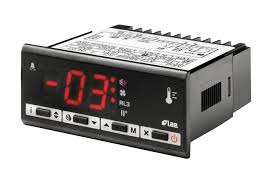
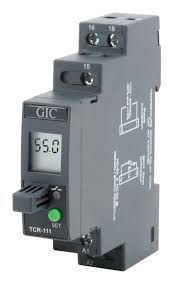
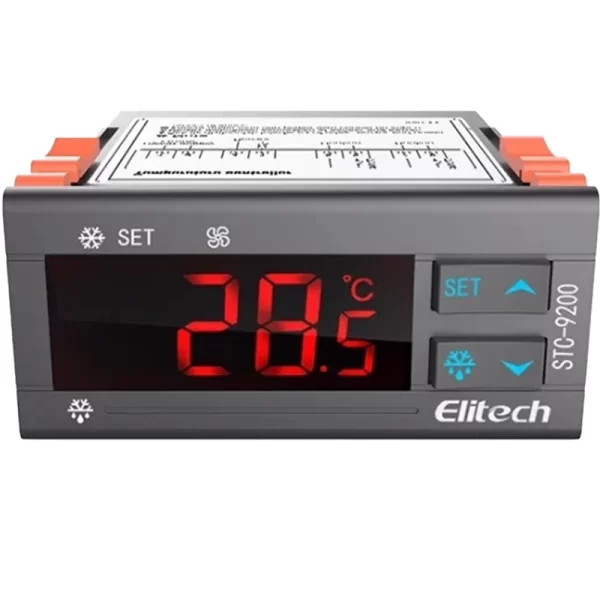
PANATECH is a trusted temperature control relay supplier in the UAE, offering advanced solutions for precise monitoring and regulation of heating and cooling systems. Our relays are designed to provide accurate switching functions based on temperature variations, ensuring smooth operation of industrial equipment, HVAC systems, and laboratory setups. Built with high-quality components, PANATECH temperature control relays guarantee safety, reliability, and long-lasting performance, making them ideal for demanding applications.

As a leading supplier, PANATECH provides a wide range of temperature control relays that can be customized to suit various industry requirements, from manufacturing plants to commercial facilities. With energy-efficient designs, easy installation, and compatibility with modern automation systems, our relays support both small-scale and large-scale projects across Dubai, Abu Dhabi, and the wider UAE. Backed by technical expertise and professional after-sales service, PANATECH ensures that clients receive not just products, but complete solutions for effective temperature management.

Types of Temperature Control Relays

1. On/Off Temperature Control Relay
This is the most basic type, where the relay switches the system fully on or fully off when the set temperature is reached. It is simple, cost-effective, and commonly used in basic heating or cooling applications.

2. Differential Temperature Control Relay
These relays operate based on the difference between two temperature points. They are often used in HVAC systems, solar heating, and refrigeration units to maintain balance between two temperature zones.

3. Analog Temperature Control Relay
Analog relays provide continuous control signals based on temperature fluctuations. They are more accurate than simple on/off relays and are widely used in industrial and laboratory environments.

4. Digital Temperature Control Relay
Digital relays use microprocessor technology and display temperature values on a digital interface. They allow more precise adjustments, multiple setpoints, and better accuracy, making them ideal for modern industrial applications.

5. PID Temperature Control Relay
PID (Proportional-Integral-Derivative) relays provide highly accurate control by continuously calculating error values and adjusting output. They are preferred in sensitive applications like laboratories, medical equipment, and advanced manufacturing processes.

6. Multi-Channel Temperature Control Relay
These relays can monitor and control multiple temperature points simultaneously. They are efficient for large-scale systems such as factories, greenhouses, and process industries.

7. Programmable Temperature Control Relay
Programmable relays allow users to set multiple programs, time cycles, and varying temperature ranges. They are often used in incubators, ovens, and industrial testing setups.

.

Uses of Temperature Control Relays

1. HVAC Systems
Temperature control relays are widely used in heating, ventilation, and air-conditioning (HVAC) systems to regulate room and building temperatures. They help control compressors, fans, and heaters to maintain the desired comfort levels efficiently.

2. Industrial Manufacturing
In industries such as plastics, chemicals, and textiles, temperature control relays regulate furnaces, boilers, and process heating systems. They ensure consistent quality, safety, and energy efficiency during production.

3. Refrigeration & Cold Storage
Cold storage facilities and refrigeration units use temperature control relays to maintain stable cooling levels. This helps preserve food, medicines, and other temperature-sensitive products.

4. Laboratories & Research Facilities
Laboratory equipment such as incubators, test chambers, and ovens depend on precise temperature control. Relays ensure accurate conditions for experiments and sensitive testing processes.

5. Medical Equipment
Medical devices like autoclaves, sterilizers, and diagnostic machines require exact temperature regulation. Relays provide reliable switching and monitoring to maintain safety and accuracy.

6. Greenhouses & Agriculture
In agriculture, temperature control relays help maintain the right environment for crops and plants. They regulate heaters, fans, and cooling systems in greenhouses to optimize growth.

7. Automotive & Electronics
In automotive applications, relays help control engine cooling systems, battery management, and climate control. In electronics, they protect circuits from overheating by triggering cooling mechanisms.

8. Energy & Power Systems
Power plants and renewable energy setups (like solar heating systems) use temperature relays to manage heat levels, ensuring safe and efficient energy conversion.

CategoryDetails
Service AreaDubai & Across UAE
Primary SolutionTemperature Monitoring Systems UAE
SpecializationIndustrial Heating and Cooling Control UAE
Key ProductTemperature Control Relays
ApplicationsHVAC systems, industrial machinery, control panels
Key BenefitsAccurate control, energy efficiency, system protection

Temperature control is a critical requirement across industries such as manufacturing, HVAC, food processing, pharmaceuticals, laboratories, plastics, and electronics. At the heart of many temperature control systems lies a key switching component known as the temperature controller relay. This device plays a vital role in maintaining precise temperature levels by controlling heating or cooling equipment based on sensor feedback. This comprehensive guide explains what a temperature controller relay is, how it works, types of relays used, applications, advantages, wiring concepts, selection criteria, and maintenance considerations. What Is a Temperature Controller Relay Advanced Control Logic and Relay Interaction In modern temperature control systems, relays no longer operate in isolation. They interact with advanced control logic embedded within digital temperature controllers, PLCs, and automation systems. The relay acts as the final execution element, but the intelligence driving it can include adaptive algorithms, hysteresis control, and safety interlocks. Hysteresis, also known as differential control, is especially important in relay-based systems. Without hysteresis, the relay would switch rapidly around the setpoint, causing excessive wear or overheating. By defining an upper and lower switching threshold, the controller ensures stable operation and longer relay life. In industrial environments, relay outputs are often integrated with interlock systems. These prevent the relay from energizing if unsafe conditions are detected, such as sensor failure, overcurrent, or abnormal temperature rise. Fail-Safe Design in Temperature Controller Relay Systems Fail-safe design is critical when temperature control affects safety, product quality, or equipment integrity. A temperature controller relay can be configured to fail in a safe condition if power is lost or a fault occurs. For heating systems, relays are usually configured as normally open so that heating power is cut off in case of controller failure. In cooling systems, normally closed configurations may be used to ensure continuous cooling during faults. Advanced systems also include alarm relays that activate visual or audible warnings if temperature exceeds safe limits. These alarm relays operate independently of the main control relay, adding an extra layer of protection. Redundant Relay Systems for Critical Applications In applications such as pharmaceutical manufacturing, chemical processing, food storage, and laboratories, redundancy is essential. Redundant relay systems use multiple relays operating in parallel or series to ensure uninterrupted temperature control. If the primary relay fails, the secondary relay automatically takes over. This approach minimizes downtime and prevents temperature excursions that could lead to product loss or safety hazards. Temperature controllers with dual relay outputs are commonly used in such setups, allowing independent control of heating, cooling, and alarm circuits. Relay Contact Ratings and Load Matching One of the most common causes of relay failure is incorrect load matching. Relay contacts are rated for specific voltage, current, and load types. Resistive loads, such as heaters, are easier to control than inductive loads like motors or compressors. Inductive loads generate high inrush currents and voltage spikes when switched, which can damage relay contacts. For such loads, contactors or solid-state relays with snubber circuits are recommended. Understanding contact ratings ensures long-term reliability and prevents issues such as contact welding, overheating, or unexpected shutdowns. Temperature Controller Relay in Heating Applications Temperature control Relay supplier UAE Temperature control Relay supplier UAE Temperature control Relay supplier UAE Temperature control Relay supplier UAE Temperature control Relay supplier UAE Temperature control Relay supplier UAE Temperature control Relay supplier UAE Temperature control Relay supplier UAE Temperature control Relay supplier UAE Temperature control Relay supplier UAE Temperature control Relay supplier UAE Temperature control Relay supplier UAE Temperature control Relay supplier UAE Temperature control Relay supplier UAE Temperature control Relay supplier UAE Temperature control Relay supplier UAE Temperature control Relay supplier UAE Temperature control Relay supplier UAE Temperature control Relay supplier UAE Temperature control Relay supplier UAE Temperature control Relay supplier UAE Temperature control Relay supplier UAE Temperature control Relay supplier UAE Temperature control Relay supplier UAE Temperature control Relay supplier UAE Temperature control Relay supplier UAE Temperature control Relay supplier UAE Temperature control Relay supplier UAE Temperature control Relay supplier UAE Temperature control Relay supplier UAE Temperature control Relay supplier UAE Temperature control Relay supplier UAE Temperature control Relay supplier UAE Temperature control Relay supplier UAE Temperature control Relay supplier UAE Temperature control Relay supplier UAE Temperature control Relay supplier UAE Temperature control Relay supplier UAE v In heating applications, the relay typically controls electric heaters, heating coils, or heating elements. These systems are common in ovens, furnaces, hot plates, water heaters, and industrial dryers. For simple heating systems, on-off control with electromechanical relays is sufficient. For precision heating, PID controllers with SSR output provide smoother temperature regulation and reduced thermal stress on heaters. Proper relay selection directly affects heating efficiency, temperature stability, and energy consumption. Temperature Controller Relay in Cooling Applications Cooling applications require different relay considerations. The relay may control compressors, solenoid valves, or cooling fans. In refrigeration systems, relay switching must consider compressor protection, including minimum off-time to prevent mechanical damage. Temperature controllers often include compressor delay functions to prevent rapid cycling. The relay only activates after a predefined delay, ensuring safe compressor operation. Cooling relays must also handle inductive loads and higher starting currents, making contactors or SSRs more suitable in many cases. Integration with PLC and Automation Systems In industrial automation, temperature controller relays are often integrated with PLCs. The temperature controller handles precise measurement and control, while the PLC manages logic, sequencing, and system coordination. Relay outputs can be wired to PLC input modules, allowing temperature-based events to trigger alarms, shutdowns, or process changes. Alternatively, PLCs may directly control SSRs based on temperature data from sensors. This integration improves flexibility, scalability, and monitoring capabilities in complex systems. Smart Temperature Controllers and Relay Outputs Modern temperature controllers now include smart features such as digital displays, communication ports, and remote monitoring. Relay outputs in these controllers can be configured through software rather than manual wiring changes. Communication protocols such as Modbus, RS485, and Ethernet allow remote control of relay states. Operators can adjust setpoints, monitor relay switching, and receive alerts without being physically present. These advancements enhance operational efficiency and reduce maintenance costs. Environmental Factors Affecting Relay Performance Environmental conditions play a significant role in relay performance and lifespan. High ambient temperatures can reduce relay capacity, especially in solid-state relays that generate internal heat. Dust, moisture, and vibration can affect electromechanical relays by causing contact contamination or mechanical wear. Proper enclosure design, ventilation, and protection ratings are essential. Temperature controller relays used in harsh environments must meet industrial standards for insulation, ingress protection, and thermal endurance. Energy Efficiency and Relay-Based Control Energy efficiency is increasingly important in temperature control systems. Relay-based on-off control can lead to energy waste due to temperature overshoot and cycling losses. A temperature controller relay is an output switching mechanism used within or alongside a temperature controller. Its function is to turn electrical loads such as heaters, compressors, fans, or cooling valves ON or OFF when the temperature reaches a preset value. The temperature controller continuously monitors temperature through a sensor such as a thermocouple or RTD. When the measured temperature deviates from the setpoint, the controller activates the relay, which then switches the connected device accordingly. In simple terms, the temperature controller makes the decision, and the relay executes the action. Role of Relay in Temperature Control Systems Relays act as an interface between low-power control circuits and high-power loads. Temperature controllers typically operate at low voltages, while heating or cooling equipment often requires higher current and voltage levels. The relay ensures electrical isolation and safe switching, allowing the controller to operate large loads without damage. Without a relay, direct control of industrial heaters or compressors would be unsafe and impractical. How a Temperature Controller Relay Works The operation of a temperature controller relay follows a closed-loop control principle. The temperature sensor measures the process temperature and sends the signal to the controller. The controller compares this measured value with the set temperature. If the temperature falls below or rises above the setpoint (depending on heating or cooling mode), the controller sends a signal to energize or de-energize the relay coil. Once activated, the relay switches its contacts to either supply power or cut off power to the connected load. When the temperature returns to the desired range, the relay switches back, maintaining stable temperature conditions. Types of Temperature Controller Relays Electromechanical Relay (EMR) Electromechanical relays use a coil and mechanical contacts to perform switching. When energized, the coil creates a magnetic field that moves the contacts. These relays are widely used due to their simplicity and cost-effectiveness. They are suitable for moderate switching frequencies and are commonly found in basic temperature controllers. However, mechanical wear limits their lifespan in high-frequency switching applications. Solid State Relay (SSR) Solid state relays use semiconductor devices instead of mechanical contacts. They provide fast switching, silent operation, and long service life. SSRs are ideal for precise temperature control applications where frequent switching is required, such as PID-controlled heating systems. They also reduce electrical noise and contact arcing. However, SSRs generate heat and require proper heat sinks. Hybrid Relay Hybrid relays combine electromechanical and solid-state technology. They use solid-state switching during activation and mechanical contacts during steady operation. This combination minimizes wear while reducing heat generation, making hybrid relays suitable for advanced industrial temperature control systems. Magnetic Contactor (Relay Type Output) In high-power applications, temperature controllers may trigger a contactor instead of a standard relay. Contactors are designed to handle high currents and voltages safely. These are commonly used in furnaces, large heaters, industrial ovens, and HVAC systems. Relay Output Types in Temperature Controllers Normally Open Relay Output In normally open configuration, the relay contacts remain open when inactive. When the controller activates the relay, the contacts close and power flows to the load. This is the most common configuration used for heating applications. Normally Closed Relay Output In normally closed configuration, the relay contacts remain closed when inactive and open when energized. This setup is often used for safety circuits or cooling systems where power must be cut when a certain temperature is reached. Changeover Relay Output Changeover relays provide both normally open and normally closed contacts, allowing greater flexibility for switching heating and cooling devices using a single controller. Temperature Control Modes Using Relays On-Off Temperature Control On-off control is the simplest method. The relay switches ON when the temperature goes below the setpoint and switches OFF when it exceeds the setpoint. This method is widely used in thermostats, water heaters, and incubators. However, it may cause temperature fluctuations around the setpoint. PID Control with Relay Output PID control (Proportional, Integral, Derivative) provides precise temperature regulation. When combined with relay or SSR output, it enables smooth control with minimal overshoot. In PID systems, solid-state relays are preferred due to their ability to handle rapid switching. Temperature Sensors Used with Relay Controllers Temperature controller relays rely on accurate sensor input. Common sensors include thermocouples and RTDs. Thermocouples are widely used due to their wide temperature range and durability. RTDs provide higher accuracy and stability for precise control applications. The relay output responds directly to the sensor’s feedback processed by the controller. Applications of Temperature Controller Relays Temperature controller relays are used across a wide range of industries. In industrial heating systems, they control furnaces, ovens, and kilns. In HVAC systems, they manage compressors, fans, and heating elements. In food processing, they regulate cooking, refrigeration, and storage temperatures. Laboratories use temperature controller relays in incubators, water baths, and test chambers. Plastic and rubber industries rely on them for mold temperature control. Pharmaceutical and chemical plants use them to maintain critical process temperatures. Advantages of Using Temperature Controller Relays Temperature controller relays provide safe electrical isolation between control and power circuits. They offer reliable switching and compatibility with a wide range of loads. Relays are easy to integrate, cost-effective, and suitable for both simple and complex temperature control systems. Solid-state relays provide silent operation and extended lifespan. Limitations and Considerations Electromechanical relays have limited mechanical life and are not suitable for high-frequency switching. Solid-state relays generate heat and require proper thermal management. Incorrect relay selection can lead to overheating, contact welding, or system failure. Load rating, switching frequency, and environmental conditions must be carefully considered. Wiring Basics of Temperature Controller Relay Proper wiring ensures safe and efficient operation. The controller output terminals connect to the relay coil or internal relay contacts. The load circuit is wired through the relay contacts, not directly to the controller. Correct grounding, fuse protection, and cable sizing are essential. For SSRs, heat sinks and proper ventilation must be provided. Selecting the Right Temperature Controller Relay Choosing the correct relay depends on load current, voltage, switching frequency, control method, and application environment. For small heaters and low switching frequency, electromechanical relays are sufficient. For precise control and frequent switching, solid-state relays are preferred. Environmental factors such as ambient temperature, dust, vibration, and humidity must also be considered. Maintenance and Troubleshooting Regular inspection helps prevent failure. Mechanical relays should be checked for contact wear and noise. Solid-state relays should be monitored for overheating. Common issues include relay not switching, stuck contacts, and overheating. Proper installation and correct load matching significantly reduce failures. Safety Aspects Temperature controller relays must comply with electrical safety standards. Overcurrent protection, proper insulation, and fail-safe configurations are essential. In critical applications, backup relays or alarm systems are often used to prevent overheating or equipment damage. Future Trends in Temperature Control Relays Modern temperature controllers increasingly use solid-state and hybrid relay technology. Integration with PLCs, IoT systems, and smart monitoring platforms is becoming common. Advanced controllers now offer adaptive PID control, remote monitoring, and predictive maintenance features. Conclusion A temperature controller relay is a fundamental component in any temperature control system. It bridges the gap between intelligent control logic and real-world power switching, ensuring safe, reliable, and accurate temperature regulation. Whether used in simple thermostats or advanced industrial automation systems, the correct selection and application of temperature controller relays directly impact system performance, safety, and efficiency. Understanding relay types, operation principles, and application requirements allows industries to achieve consistent temperature control and long-term operational reliability.

Who is a reliable temperature control relay supplier UAE?

Panatech is a well-known and reliable temperature control relay supplier UAE, serving industrial clients across Dubai and the wider UAE. The company provides high-quality relays designed for accurate temperature monitoring and control in demanding environments.