Table of Contents
ToggleStepping Motor Supplier UAE
High-Performance Stepping Motors & Drives from PANATECH UAE
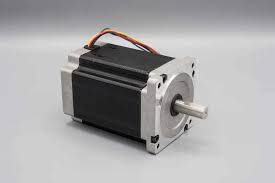
PANATECH is a premier supplier of premium quality stepper motors and drives in the UAE, servicing the automation, robotics, and motion control segments. Stepper motors or stepping motors are used in applications that necessitate extremely accurate movement or positioning.PANATECH provides an extensive portfolio of stepper motors available in various dimensions, motor powers, and voltages, to serve a multitude of industrial applications. These motors deliver very precise and dependable results in CNC machining centers, 3D printers, medical equipment and apparatus, as well as the packaging industry. PANATECH takes care to only use top class brands in motor manufacturing to serve various applications.
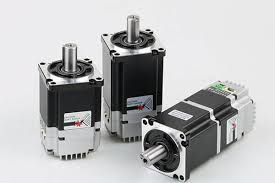
Further to delivering a plethora of stepper motors of excellent quality,PANATECH also offers its range of suitable, high-performance stepping motor drives. Stepping motor drives facilitate precise control over the speed, torque, and direction of the stepper motor, in a hassle-free and cost-effective manner, thus integrating smoothly with automation control solutions. Our products in the stepper motor driver line-up also comprises both, open-loop, and closed-loopStepper Motor Drivesfrom leading International names such as Delta, Panasonic, & Schneider Electric.
These drivers not only improves system efficiency but also minimizes resonance in operation, enabling smoother motion control even in high performance demand applications.With technical assistance and after sales services and prompt delivery in UAE ,Panatech is best fitted to solve your motion control requirements.
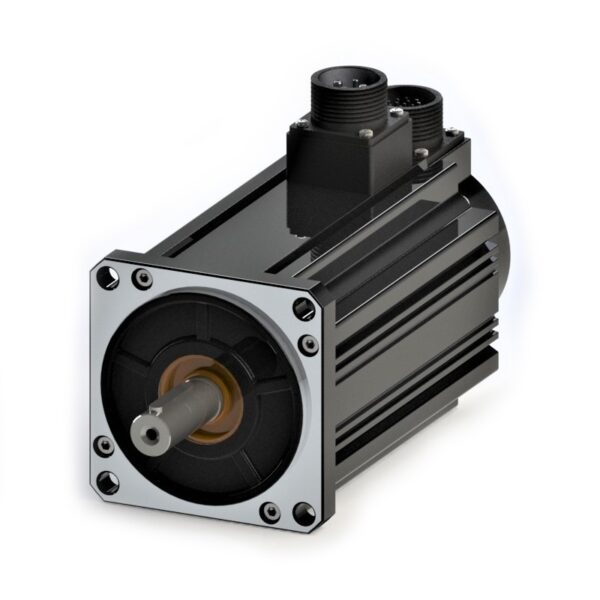
Unlocking the Power of Motion: Types of Stepping Motors & Drives
Types of Stepping Motor
1. Permanent Magnet Stepper Motor (PM Stepper)
The Permanent Magnet Stepper Motor works based on a permanent magnetrotor and an electromagnetic coils-stator. The motor works on a relatively basic principle, is cheap, is easily understandable and thus easiest to operate. The working is based on a permanent magnets rotor and the stator which consists of magnetic poles surrounded by electromagnetic coil.
PM stepper motors are best for low speed & low torque motor applications like in small printer/scan devices and household appliances.
For applications which demands lesser accuracy and minimal response speed, PM are the best option to use.
2. Variable Reluctance Stepper Motor (VR Stepper)
The Variable Reluctance Stepper Motor consists of soft iron and a rotor along with multiple sets of stator windings. It produces its output by realigning magnetic reluctance with the poles of the stator every step energized, ensuring no external magnetic force. No permanent magnet in VR stepper motor allows for the higher speeds. VR steppers have an inherently low inertia, making them suited for applications where speed of response and acceleration is most important with low overall torque: primarily small positioning systems and some instrumental applications.
3. Hybrid Stepper Motor
A Hybrid Stepper Motor combines the benefits of both the above systems (Permanent Magnet & Variable Reluctance type of stepper motor) thus gives highest possible performance (higher torque output at each speeds) to cost ratio for moderate speed. The rotor is a permanent magnet which is enclosed by toothed structure made of laminations to help in alignment and provide an efficient magnetic structure. The output in a Hybrid motor is generated as the magnetic lines of force produced in stator can only follow paths available for minimum flux path.
4. Closed-Loop Stepper Motor
A Closed-Loop Stepper Motor has its rotor position continuously monitored by an encoder or any other feedback device to ensure that the rotor is always where it should be and it’s never “lost” steps or positions. It’s a motor with intelligent “eyes” always seeing how well it is operating. The advantages are increased torque, decreased risk of dropped steps, reduced vibration.
It can increase response speed and decrease motor heat.
It is used in High-value and Precision driven devices.
5. Unipolar Stepper Motor
In order to simplify the required power circuit unipolar construction has been employed. It comprises of DC motor in which two or more sets of coils used and dc power can be made available to each coil. These motor are of moderate torques and can be easily drive by using H- drive controller circuit. Unipolar devices require fewer signal lines to drive them when driving only 2 phases at a time; driving just two phases at a time in bipolar drives is usually the standard efficient drive; you need to drive A1- B1 and B2-A2 for unipolar driver.
6. Bipolar Stepper Motor
The Bipolar Stepper Motor uses center-tapped, full bipolar windgings. Current flows from H-bridge to control the drive current to both the poles (in both directions). They have slightly higher torque output over unipolar motors. Bipolar devices often deliver better performance like Higher torque to cost ratio, Better energy efficiency over unipolar versions for a number of applications including Professional CNC machined, medical instrumentation etc.
Types of Stepper Motor Drives
1. L/R Drives (Resistance-Limited Drives)
These linear drives (L/R) use fixed resistances for voltage limiting. These drives are simple, inexpensive, but heat generated is a serious consideration and hence it offers limited performance particularly regarding speed and torque. These Drives are used for very low-end and no particular precise movement.
2. Chopper Drives
Chopper drives use high-frequency switching (PWM) method to deliver controlled amount of current that power is efficiently utilized; generating minimum heating and better speed torque capability than that offered by L/R drives. These drives are widely suitable for medium range and even for higher range motor control systems especially for applications like conveyors, automation and others where a stable and efficient torque needs at respective speed throughout.
3. Microstepping Drives
Microstepper divides each full step of a stepper motor into smaller intervals (called micro-steps) up to several thousand. The resultant is very smooth, nearly noiseless operation & reduced vibration at very low speed range. Precise micro stepping leads to increased position resolution and reduced risk of skipped steps in these drive modules. Used mainly in automation equipments and specialized application including printing and CNC’s for enhanced stability.
4. Closed-Loop Stepper Drives
Closed Loop Stepper Drives ensure the motor performs as commanded without missing steps or entering stall. It has capability to monitor motor position and react to compensate for errors in real-time. Thus, the servo capability in terms of accuracy and speed, along with smooth smooth operation and torque can be maintained in high demands. Closed-loop systems allow optimizing for performance, efficiency, and overall operating characteristics.
5. Digital Stepper Drives
Digital drives receives digital input signals to create a controlled train of pulses driving the stepper motor. They provide a high degree of control over motor parameters, such as acceleration, deceleration, microstepping resolution, and indexing. Digital stepper drives are highly programmable and integrated into automated industrial and commercial systems.
6. Analog Stepper Drives
Analog stepper drives control the motor by using continuous analog signals (voltage or current). They are less flexible and often offer fewer features compared to digital drives, but can be simpler to integrate into existing analog-based systems. Often used in older or more basic automated setups where digital control is not necessary.
The Practical Benefits of Stepping Motors & Drives
Stepping motors and drives are indispensable to the field of automation and control applications. These motors are characterized by their ability to rotate in discrete angular steps, which enables precise control of positioning and motion without the necessity for sophisticated feedback systems. This capability makes them appropriate for usage in a wide range of machinery, including 3D printers, CNC machines, textile equipment and robotic applications. Since each pulse transmitted to the stepping motor equates to a precise rotational movement, they provide the perfect setup for operation in which accurate rotation and control of speed and stopping position are required.
The stepping motor drivers add to the functionality of stepping motors and improve performance by controlling current flow, which is critical for smooth operation, higher torque and less vibration. Using advanced features like micro-stepping and closed-loop control, even greater precision, stability and responsiveness can be achieved. Stepping motor systems are ideal for all applications requiring accurate positioning and positioning-based motion control-whether for medical instruments, manufacturing lines or automated inspection equipment.
Why is choosing a Stepping Motor Supplier UAE important for industries?
A Stepping Motor Supplier UAE ensures reliable, high-performance motors suited for industrial automation.
What Is a Stepping Motor?
A stepping motor is designed to move in precise, controlled steps, making it suitable for applications that require accurate positioning and motion control.
Where Are Stepping Motors Commonly Used?
They are widely used in CNC machines, robotics, packaging equipment, printers, conveyors, and industrial automation systems.
How Do I Choose the Right Stepping Motor?
Consider factors such as required torque, speed, load, motor size, operating voltage, and the type of driver or controller used.
What Is the Difference Between a Stepping Motor and a Servo Motor?
Stepping motors generally provide simple and precise open-loop positioning, while servo motors use feedback for more advanced speed, torque, and position control.
Do Stepping Motors Need a Driver?
Yes. A suitable stepper driver controls the motor’s current and movement according to signals from the controller.
Where Can I Find a Reliable Stepping Motor Supplier UAE?
Choose an experienced supplier such as Panatech that can provide suitable motors, drivers, technical guidance, and support for your automation requirements.
What Are the Key Benefits of Choosing a Stepping Motor Supplier UAE?
| Criteria | Advantage for Industrial Applications |
|---|---|
| Precision Control | Accurate positioning and repeatable motion |
| High Torque Performance | Suitable for heavy-duty automation tasks |
| Quality Assurance | Tested motors meeting industrial standards |
| Wide Product Range | Multiple NEMA sizes and torque options |
| Technical Expertise | Professional selection and integration guidance |
| Fast UAE Delivery | Reduced downtime and quick project execution |
| Bulk Availability | Ideal for large-scale industrial requirements |
| After-Sales Support | Ongoing assistance and troubleshooting support |
[…] https://panatech.ae/stepping-motor-supplier-uae/ […]
We were looking for a reliable Stepping Motor Supplier UAE and chose Panatech for our automation project. The motor quality was excellent, delivery was on time, and the team helped us select the right solution for our application. Very happy with the service and support.